
The build-up to ICE Barcelona 2026
ICE Barcelona 2026 drew major attention once organizers confirmed a blindfold exhibition from Carlsen and Nakamura. Magnus Carlsen's career continues to display strong performance and achievements, maintaining his position as the world No. 1 in classical chess as of 2026. He favors pattern absorption over rote memorization, rebuilding positions from long-held mental models. That approach fits blindfold play, where every move depends on accurate internal maps. Nakamura’s edge came from years of streaming rapid analysis aloud. Verbalizing lines sharpens recall and move ordering, core skills in blindfold chess. Carlsen won the Speed Chess Championship final against Alireza Firouzja, securing a notable victory. a demand that mirrors blindfold exhibitions with live audiences. Preparation norms shifted after 2023 as chess flooded social feeds. Carlsen remarked, "According to a FIDE article by IM Michael Rahal, during a fireside chat at ICE Barcelona 2026, Magnus Carlsen stated, "since early 2023, chess has just kept showing up in everybody’s algorithms," reflecting on the game's increased visibility in digital feeds. (FIDE, 2026)." Engines accelerate feedback on ideas, but blindfold work still needs board-free drills. Platforms like coordinates training build square relationships without visuals, and both players added vocal move rehearsal for weeks to reduce fatigue past move 20. The event blended chess culture with gaming tech. Spectators suggested moves, followed live analysis, and saw positions updated in real time. Younger players who study on tablets learned why digital pattern skill does not guarantee strong mental reconstruction, and how targeted drills can close that gap. The lesson from Barcelona was clear: mastering blindfold visualization improves practical calculation and time management. Spectators watched training systems, not tricks. To build the same skills, start with chess visualization training that grows board awareness step by step.Carlsen's preparation and strategy
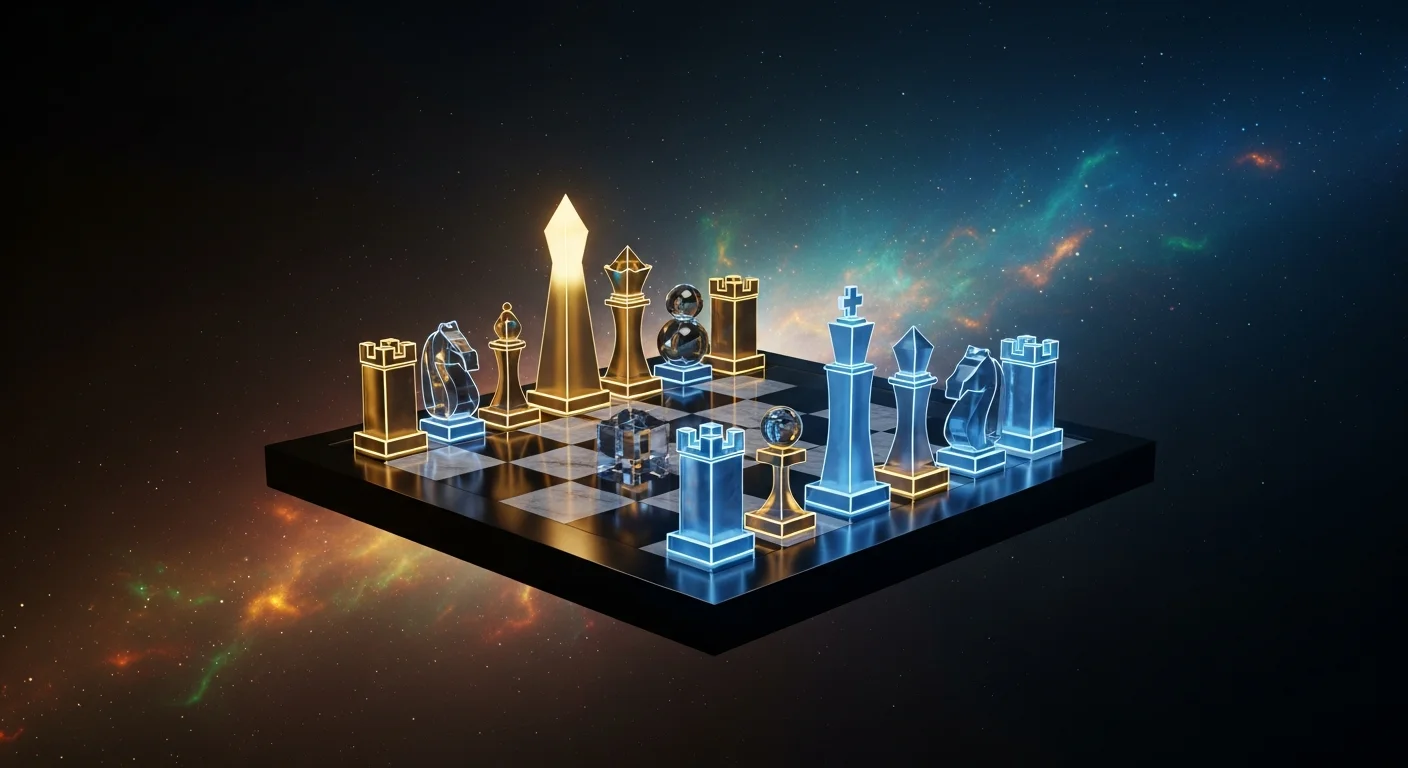
Carlsen’s team mixes classical study with opponent modeling. Using neural-style pattern searches across thousands of games, they flagged Nakamura’s readiness to sacrifice material for initiative in rapid formats. Carlsen drilled endgames from King’s Indian structures, reviewing numerous recent games where rivals forced simplifications. In round four, a prepped queen sacrifice steered a “drawn” rook ending into winning chances.
Daily blindfold sessions against reduced-strength Stockfish refined his reconstruction speed. He practiced recalling a position after a three-second glimpse, then calculating without sight. In the quarterfinals, he found a 12-move forcing line with about 40 seconds on his clock, a direct payoff from that routine.
He alternated 15-minute visualization blocks with 10-minute no-chess breaks, sustaining sub-30-second average move times in the final while peers slowed sharply.
Since 2023, his opening prep has favored “equal by engine, hard for humans” positions. He leaned on the English Opening to reach complex middlegames where intuition matters more than long theory trees, trading depth of memorization for clarity of plans.
Carlsen’s post-game notes showed targeted counter-prep. After studying Nakamura’s public blindfold routines, he aimed for positions where changing central pawn tension forced constant recalculation. Their semifinal featured exactly that, ending with a decisive pawn error under time stress.
His team also employed reverse preparation. In positions that opponents anticipated from forthcoming "anti-Carlsen" strategies, he made a surprising move around the sixth or seventh turn with AI-tested enhancements, disrupting his rivals' strategies. Systematic blindfold training tied the plan together across formats. Magnus Carlsen continues to demonstrate exceptional performance in engine evaluations and consistently converts advantageous positions, as evidenced by recent events. The process looks intuitive over the board, but it rests on data-driven scenarios mapped before move one.
Nakamura's rise and innovative tactics
Nakamura entered Barcelona rated 2838, but his path ran through cameras as much as tournaments. Since 2019 he has streamed thousands of hours of blitz and bullet to millions on Twitch and YouTube, turning real-time explanation into training while building the game’s largest audience.
Volume play refined his pattern bank. Logging 40 or more rapid games daily taught instant recognition of tactical motifs. In Barcelona, positions that cost most grandmasters 10 minutes of calculation often took him seconds, creating time advantages that snowballed. His consistent performance in speed chess formats reflects a method tuned for sharp, concrete positions, as seen in recent high-profile events.
Explaining moves live forces fast, clear evaluation. Thousands of on-stream puzzles become a mental library he can access instantly during tournament play.
He revived the rare Agincourt Defence against 1.d4, accepting structural flaws for activity. Versus Levon Aronian, he took on a weak c6 pawn by move 12. Engines showed White slightly better, but by move 24 Aronian had burned 45 extra minutes coping with threats. On move 31, Nakamura sacrificed a pawn with h5. The engine disliked it, yet it created three credible attacking plans. Aronian chose a second-best defense, and Nakamura converted within six moves.
Against Fabiano Caruana, he deviated on move six with a bishop sacrifice to seize activity. By move 18, material was equal but Black’s king was unsafe. On move 24, a knight sacrifice opened three attacking lines. Caruana’s position collapsed five moves later under multiple threats and dwindling time.
The blend of online speed training with classical play challenges long-held practice. Elite margins are razor-thin, as the 2025 Speed Chess Championship showed with Carlsen’s 67.8% win rate. Nakamura’s approach targets those margins by creating positions humans defend poorly, even when computers call them equal. Use chess visualization training to reinforce tactical cues for developing similar pattern depth.
The turning point: key moments and decisions
Round five captured the event’s psychology. Carlsen held a classical edge, with a central pawn majority, active pieces, and a safe king. Then Nakamura sacrificed a bishop, shifting the game from slow squeeze to a forcing fight filled with immediate threats.
Carlsen could refuse and lose momentum, or accept and calculate 10 moves deep with little time. He took the piece. A cascade of forced moves followed as both clocks bled, testing memory and accuracy without visual confirmation.
Nakamura timed the sacrifice just before move 40, when players rush to reach the time bonus and error rates spike.
The sacrifice was unsound by engine standards, but the perfect line required more time than either player had. The draw felt like a win for Nakamura and a miss for Carlsen, who had held real winning chances.
In round eight, Carlsen applied the same pressure from the other side. Needing a win against a lower-rated rival, he chose a setup that demanded 40 accurate defensive moves. The opponent held for 35, then cracked under nonstop threats.
Elite decisions weigh practical problems as much as objective value. The right move is often the one that creates the most difficult choices for your opponent given the clock and match situation. To practice spotting these forcing ideas fast, try knight movement training that builds instinct for checks, captures, and threats.
Lessons for aspiring chess players
Carlsen and Nakamura showed that mastery is selecting the right skill under pressure, then executing. Openings and endgames matter, but so do the messy transitions where choices decide the game.
The strongest lesson is adaptability. Carlsen squeezed for 60 moves against Gukesh, then chose initiative over precision versus Praggnanandhaa. That switch comes from pattern memory built across thousands of positions, not blind memorization.
Train across formats. Rapid builds intuition. Classical builds calculation discipline. Blitz sharpens tactics. Keep all three in the mix so you can shift gears midgame without panic.
Train what you can’t see yet
Nakamura’s speed in complex middlegames comes from familiarity. He has seen the structures before. Most club players stall at three-ply because they lose the position in their head. Chess visualization training fixes that bottleneck by improving board recall and square control tracking.
Try this: stare at a position for five seconds, then rebuild it from memory. Add pieces, change structures, or calculate a short forcing line with eyes closed. Carlsen reportedly trains blindfold daily. You do not need full blindfold games, but short, regular drills build the same pathways.
Embrace technology without replacing judgment
Engines find tactics and candidate moves you might miss, but they ignore psychology. Lines that are +0.3 can be winning against a human who hates those positions. Use engines to check tactics and refine move orders, then choose plans you can execute under stress.
Apply the same logic to openings. Learn structures and plans first, then let engines improve details. To build the board awareness that makes those plans work, these training modules develop spatial recognition and pattern recall.
Review everything, especially wins
Carlsen’s camp reviews every game. Wins hide shaky decisions that future opponents will punish. After each game, ask: where did the position’s character change, which move needed the most calculation, and what would you do differently?
Write your answers before checking an engine. Focus on decision points, not every move. You are training judgment, not copying a line.
Balance mental and physical preparation
Nakamura pairs aggressive chess with fitness. Rapid chess spikes heart rate and cortisol. Players who ignore conditioning blunder more in time trouble.
Basic habits pay off: exercise for focus, sleep for memory, and steady nutrition for energy. Build mental stamina by playing multiple serious games in a session and solving hard positions when tired.
Key takeaways
- Adaptability beats specialization: Train across time controls and positions to switch plans midgame.
- Visualization is learnable: Use blindfold and reconstruction drills to hold positions longer.
- Engines are tools, not authorities: Pick human-challenging plans you can execute.
- Analyze wins hard: Your best games often hide the next weakness.
- Fitness matters at the board: Better sleep, exercise, and nutrition improve decisions under time pressure.
Start today: Pick one recent game. Spend 15 minutes marking three decision points and writing why you chose each move before checking an engine.
The gap between Carlsen, Nakamura, and club players is built on hours of pattern study, calculation drills, clear plans, and stamina. Apply these habits, and you will make stronger decisions when the clock runs low.
Frequently Asked Questions

Antoine Tamano
Angers France
I’m Antoine Tamano, founder of Instablog — a tool that helps businesses turn existing website content into a consistent, SEO-friendly blog. After working with startups and larger companies, I saw how hard it was to keep up with blogging, even when the value was clear. Instablog was born from a simple idea: make blogging easier using what’s already there. Here, I share what I’ve learned building Instablog and why smart content should be core to any growth strategy.


