
Two super-grandmasters played a full game without seeing a single square. Could you keep an entire position in your head for 37 moves? This recap of the Carlsen and Nakamura blindfold duel shows that this skill is trainable. Many players struggle when the board disappears, and their calculation collapses. That gap is real, and it is solvable. In this guide, you will learn practical visualization drills, strategic choices, and pressure tools. For the deeper case for why top players train without a board, see the reasons behind blindfold chess, and for related coverage of elite chess news, see Andy Woodward sets new record for bullet chess ratings.
The art and challenge of blindfold chess
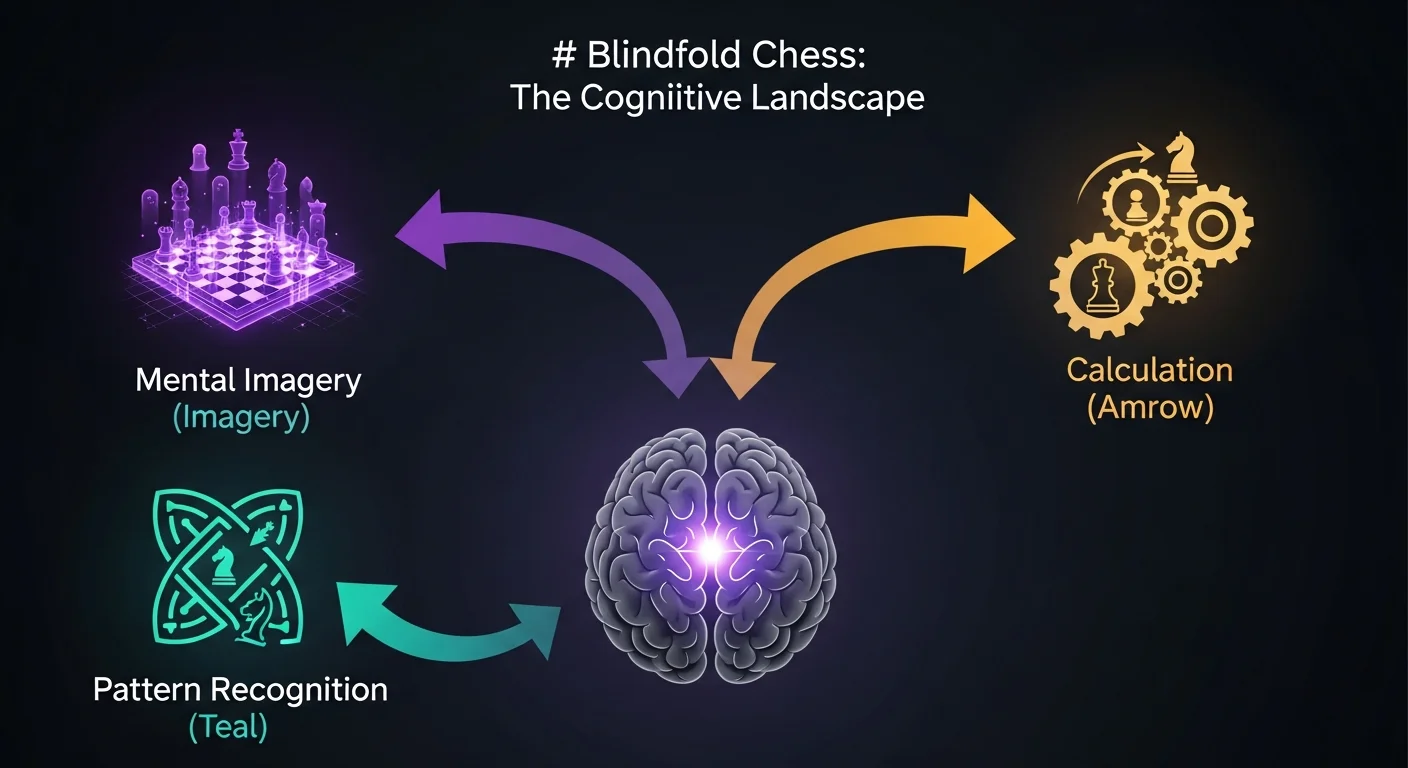
Blindfold chess removes the board and pieces entirely. Players must build and maintain a complete mental image of the position at all times. Every move lives in the mind, which demands intense focus and spatial memory. It is chess at its most cognitively demanding.
This format amplifies every phase of the game. Tactical patterns become harder to spot. Strategic plans require deeper visualization. Even simple calculations demand full attention. Both players demonstrated exceptional move accuracy throughout the encounter, a remarkable display of discipline under blindfold conditions.
Blindfold play is not a novelty. It reveals how top players compress information into patterns. They perceive relationships, pressure points, and dynamic plans, not isolated squares. That holistic processing separates masters from amateurs, and the research on the cognitive benefits of blindfold chess shows the transfer back to sighted play is concrete.
The cognitive challenge
Blindfold play tests working memory and spatial reasoning together. Beginners track 5 to 7 pieces at a time, while masters visualize complete positions.
As commentator Levy Rozman (GothamChess) emphasized during his stream, the hardest transition in any chess game is from the memorized opening into genuine original thinking, and blindfold chess magnifies that transition because you navigate unfamiliar territory with no visual landmarks.
For aspiring players, blindfold chess offers a powerful training ground. Start with simple drills such as a knight's tour or tracking pawn structures. These skills transfer directly to regular games, where clearer visualization improves calculation and pattern recognition. The blindfold chess learning hub breaks this progression into concrete steps.
A clash of titans: Carlsen vs. Nakamura
The scene was the usual calculation faces, without the board. In January 2026 Magnus Carlsen and Hikaru Nakamura met for an exhibition blindfold game at ICE Barcelona 2026. The duel, played in a 15-minute time control and commentated live by Levy Rozman, ended in a 37-move draw by repetition.
Carlsen, a five-time classical World Champion (2013 to 2021; he declined to defend the title in 2023), faced Nakamura, the strongest speed-chess player of the era, in what organizers billed as a first-of-its-kind publicly staged blindfold head-to-head between the world's two top-ranked players. The chess world leaned in. For context on the deepest historical performances, see our guide to blindfold chess world records.
The situation felt significant without a trophy. Both reputations as elite visualizers were on display. One misremembered piece, and everything could collapse. Instead, the game delivered a masterclass in precision over 37 moves.
The game defied expectations from the opening. Nakamura chose an unconventional setup. Carlsen replied with fresh ideas. Neither could lean on deep preparation, and they navigated new positions by intuition and calculation alone.
Midway through, Nakamura produced a bishop sacrifice that forced a perpetual check, flipping the position from maneuvering to sharp complications in moments. A piece sacrifice requires seeing many moves ahead and tracking activity across the board. Nakamura computed the sequence mentally before announcing it. Carlsen then visualized the critical lines to defend accurately.
As complications grew, neither player slipped. They kept their accuracy, solved the tactical maze, and drew by repetition in a perpetual-check sequence in which neither side could escape without worsening the position. The result mattered less than the journey. They showed that elite visualization can rival board-based play in precision and creativity.
Strategic ingenuity: learning from their moves
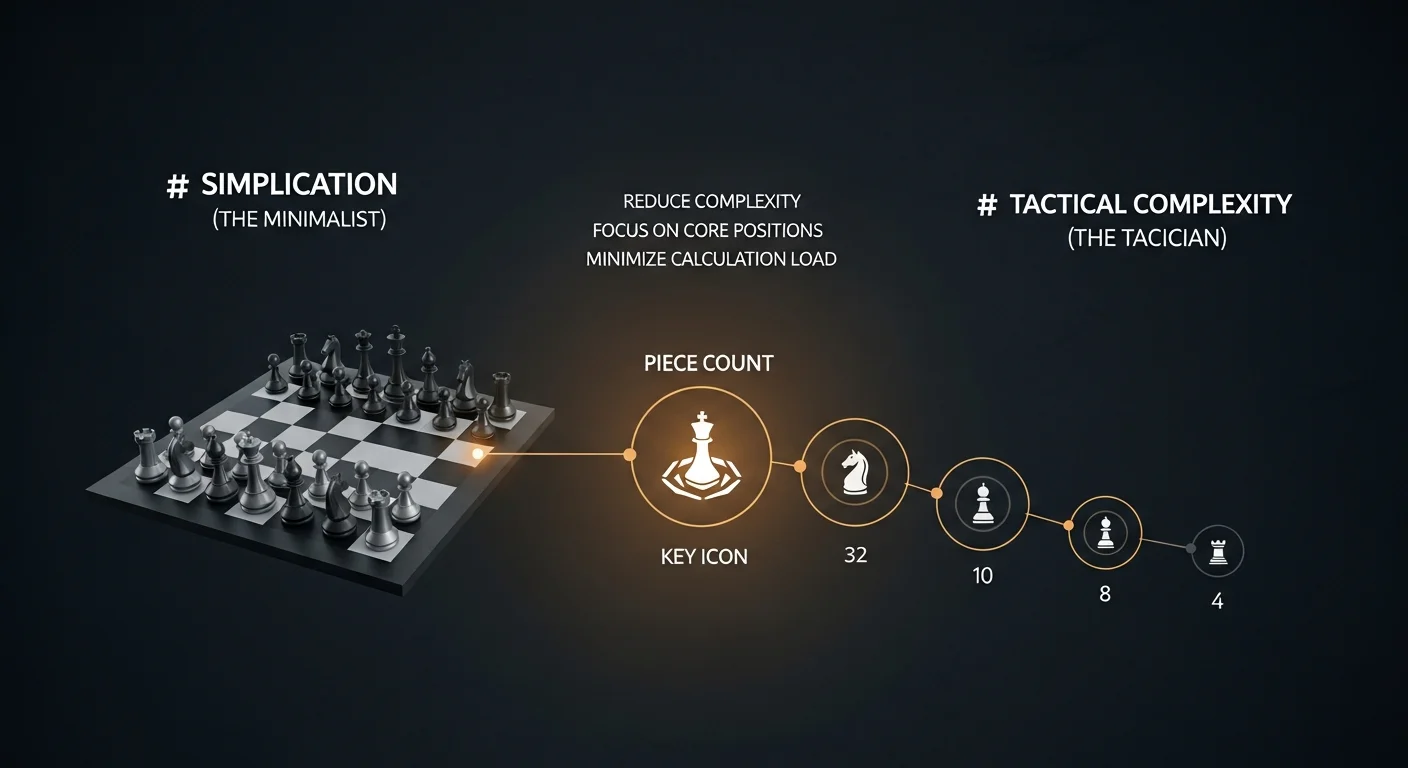
The duel was not only a memory test. It showcased real-time strategy under pressure. Neither player followed a script. They adjusted, read threats, and shifted plans in positions they could not see.
Carlsen favored simplification. He traded pieces to reduce the elements he had to track. Fewer pieces meant less cognitive load. This was not passive. It was disciplined clarity that preserved accuracy as the position evolved.
Nakamura chose the opposite path. He embraced complexity through tactical sacrifices. His moves seized initiative and forced broad calculation. That approach created chances but demanded deep visualization and stamina. The underlying patterns are covered in our breakdown of 5 visualization techniques from top chess players.
Both strategies offer practical guidance. Managing mental resources matters as much as brilliance. Simplify when your calculation feels stretched. Calculated risk-taking can shift momentum, but it requires strong visualization you trust.
The game ended level, yet the strategic battle taught plenty. Patience and aggression both worked. No single philosophy dominated. Precision and timely adaptation made both approaches viable.
Emotional resilience: handling high-stakes pressure
Strategy fails when nerves take over. Both players faced moments when pressure could have cracked them. They held firm, and their responses offer lessons far beyond chess.
Blindfold play removes the visual safety net. Every calculation lives in the mind. One slip can lose the game. Stress naturally rises in that environment, even at the top. Carlsen has publicly acknowledged many times that pressure is "part of life" in elite competition.
Elite competitors feel pressure. The difference is recovery speed when tension spikes. During the middlegame, Nakamura calculated a complex line for minutes. His face showed strain. When he moved, his voice stayed calm and his hand steady. That control reflects training.
Pressure management technique
When stakes rise, pause and breathe once or twice. That grounding creates space between your emotions and your next move.
Perspective mattered too. This was one game in long careers. Neither catastrophized. When a small inaccuracy appeared, neither player spiraled. They adjusted and continued. That mindset stops small errors from snowballing.
Pressure response | Ineffective approach | Elite player approach |
|---|---|---|
Initial stress spike | Try to suppress feelings | Acknowledge tension, breathe through it |
Mistake made | Dwell on error, spiral | Note it, adjust plan, move forward |
Time pressure | Rush decisions frantically | Prioritize key calculations, stay deliberate |
Uncertainty | Seek impossible certainty | Trust preparation, decide with available info |
Ready to train composure and vision together? Play a blindfold game on Dark Squares and build skills that transfer to every challenge.
Applying the lessons in your own chess
You study a brilliant game, feel inspired, then struggle to apply it. The gap between insight and execution can feel huge. The duel gives you specific techniques you can use today.
Improvement does not require genius. It requires targeted practice. Visualization sits at the center. When your mental board is clear, tactics appear, plans sharpen, and blunders fade.
Begin by analyzing your own games without moving pieces. Pull up a recent loss. Close your eyes and replay the critical moments. Where did your mental board blur? That is your training target.
Try a five-move challenge from a recent position. Calculate five moves ahead without looking. Write your line, then verify. This quick drill builds the same muscles seen in the duel.
A consistent theme from the duel: when calculation gets muddy, trade pieces and clarify the position. That is strategic wisdom. Train for clarity, not complexity for its own sake. Focus on patterns more than memorized trees of moves.
Build a weekly routine. Spend fifteen minutes a day on blindfold drills. Start with simple endgames like king and pawn versus king, then progress to busier middlegames. Track accuracy to see improvement. The structured training journey is a ready-made path for this.
Want a structured start? Unlock the full Dark Squares curriculum with a one-time 29€ lifetime pass, built around the same principles on display in this blindfold duel.
Embarking on your own blindfold journey
You have seen what elite players can do. Where should you start? You do not need full blindfold games on day one. Build your mental muscles gradually with manageable steps.
Begin with simple visualization. Picture an empty board for a minute. See square colors and coordinates. Place a single piece and move it mentally. A knight on e4 jumping to its options is a great first drill.
Next, shift to short tactics. Study a two-move mate for thirty seconds, then close your eyes and solve it. These bite-sized challenges test memory without overload. Immediate feedback keeps progress visible.
Use opening familiarity to reduce load. Pick a straightforward system like the Reti or London. Play the first six moves on a board until automatic, then announce those moves blindfolded while a partner mirrors them. Familiar patterns lighten the mental burden.
As confidence grows, extend your range. Play a full blindfold game against a beginner-level bot or a much weaker opponent. Expect mistakes. Pieces will vanish or appear on the wrong square. That is normal.
Building a sustainable practice routine
Consistency beats intensity. Ten daily minutes outperform a single weekly marathon. Frequent, focused exposure builds the neural pathways that support a stable mental board.
Use progressive difficulty. Warm up with something you have mastered, then add one element that stretches you slightly, perhaps two extra moves in a sequence or one more piece in a puzzle. This steady climb sustains motivation and growth.
Skill level | Exercise type | Time investment |
|---|---|---|
Beginner | Single piece visualization, simple tactics | 10 minutes daily |
Intermediate | Six-move sequences, weak opponent games | 15 to 20 minutes daily |
Advanced | Full games, complex middlegame positions | 30+ minutes daily |
Use technology as a support, not a crutch. Solve puzzles on Dark Squares blindfold training, then replay them with eyes closed. Study complete master games as mental workouts. Play one annotated game on a board and the next day try to reconstruct it from memory. You will miss moves at first; the attempt itself strengthens your positional memory.
Your first step: close your eyes and visualize a board. Pick a square, say its color and coordinates aloud. Do it five times with different squares. Tomorrow, repeat and add one quick knight move.
Related reading
Frequently Asked Questions
Last updated: Apr 28, 2026


