
Mental Chess Training: The Complete Guide to Playing Without Seeing the Board
Antoine6 min read
Table of contents
Imagine sitting across from a chessboard, closing your eyes, and still being able to play a full game from memory. This is the art of mental chess, a skill that transforms how you understand and visualize the game. Whether you call it blindfold chess, mental chess, or playing without sight of the board, this discipline represents one of the most rewarding challenges in chess training.
What does mental chess mean?
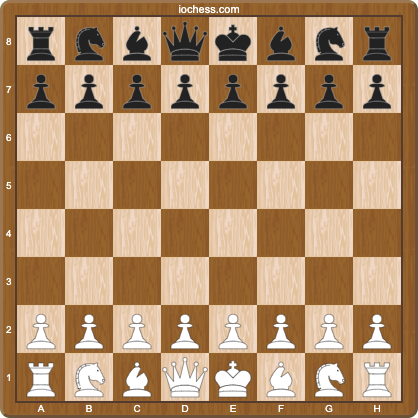
Mental chess means playing or working through chess in your head, calculating moves and holding the position in your mind without physically moving the pieces. In its purest form it is blindfold-style visualization: you picture the 64 squares and track where every piece sits using memory alone, without looking at a board at all. So when people talk about mental chess, they usually mean this ability to see and play the game internally rather than on the physical board in front of them.
What Is Mental Chess Training?
Mental chess training is the practice of playing or analyzing chess positions entirely in your mind, without moving physical pieces or, in its purest form, without even looking at the board. It builds on your ability to visualize the 64 squares, track piece positions, and calculate sequences of moves using only your memory and imagination. Our pillar guide on chess visualization training maps the full skill ladder this sits on.
The benefits extend far beyond the novelty of playing blindfolded. Players who train their mental chess abilities develop sharper calculation, deeper visualization, and stronger pattern recognition. These skills translate directly into better over the board performance.
The History of Blindfold Chess
Blindfold chess has a rich history stretching back centuries. The earliest recorded blindfold games date to the medieval period, but the discipline truly flourished in the 18th and 19th centuries when masters began performing simultaneous blindfold exhibitions.
One of the most famous blindfold performers was George Koltanowski, who set a famous blindfold record in 1937 by playing 34 games simultaneously while blindfolded. Our deep dive on Koltanowski vs Najdorf contrasts his memory method with Najdorf's calculation style. The current Guinness record for simultaneous blindfold games is held by Timur Gareyev, who played 48 boards in 2016, one milestone in our full timeline of blindfold chess world records.
Other legendary players, including Alexander Alekhine and Miguel Najdorf, pushed the boundaries of simultaneous blindfold play. Alekhine's 32-board record in Chicago in 1933 raised the bar, and Najdorf famously played 45 blindfold games at once in 1947, partly to send a message to relatives in war torn Europe that he was alive.
How to Start Training Your Mental Chess
Beginning your mental chess journey requires patience and structured practice. If you are brand new, our 7-step beginner journey lays out the full path. Here is a proven approach to developing your visualization skills.
Step 1: Master the Board Coordinates
Before you can play blindfolded, you must know the board intimately. Practice naming the color of any square instantly. Is h1 light or dark? What about e4? This foundational skill makes everything else possible, and our square colors trainer plus the dedicated square colors drill build it fast.
Step 2: Visualize Piece Movements
Practice tracking a single piece as it moves around the empty board. Follow a knight as it hops from g1 to f3 to e5. Train your mind to see the piece on its new square without any visual aid, using the coordinate trainer to lock location and movement together.
Step 3: Play Through Famous Games
Take a famous game and play through it in your mind, one move at a time. Start with short games and gradually work up to longer, more complex battles. The famous games trainer lets you replay classic encounters blindfold with engine verification.
The Cognitive Benefits of Mental Chess
Research into chess and cognition suggests that mental chess training strengthens working memory and spatial reasoning. When you hold an entire chess position in your mind, you exercise the same cognitive muscles used in mathematics, music, and strategic planning. Our science-backed review of the mental benefits of blindfold chess covers the neuroscience in depth.
Many chess coaches recommend blindfold training as a way to break through rating plateaus. The intense visualization required forces you to calculate more precisely and remember positions more accurately. If you are worried that this load could be harmful, see what science actually says about blindfold chess safety.
Common Challenges and How to Overcome Them
Most beginners struggle with losing track of pieces midway through a game. This is completely normal. The key is to start small and build gradually. Begin with just a few pieces on the board and slowly increase complexity as your confidence grows. Many of these pitfalls are avoidable once you know them, as our list of 9 blindfold chess mistakes to avoid explains.
Another common challenge is visualizing the board from your opponent's perspective. With practice, you will develop the ability to mentally rotate the board and see positions from both sides.
Tools and Techniques for Practice
Modern technology offers many ways to practice mental chess. You can play blindfold chess online against Stockfish or other players, and some tools gradually fade the pieces from view, helping you transition from full sight to complete blindfold play. For a structured weekly plan, follow our structured blindfold training regimen, and to compare the options see the best blindfold chess apps of 2026.
At DarkSquares, we have built training exercises specifically designed to develop your visualization skills progressively, meeting you wherever you are in your mental chess journey.
Conclusion
Mental chess training is a journey that rewards patience and consistent practice. Whether your goal is to play a full blindfold game or simply to sharpen your calculation and visualization, the skills you develop will enhance every aspect of your chess. Start small, stay consistent, and watch your mental chess abilities flourish.
Micro-action: today, name the color of ten random squares out loud in under a second each, then track one knight through three jumps with your eyes closed. Build from there with the Dark Squares training hub.
Related reading
Frequently Asked Questions
How can I practice mental chess if I don't have a board?
You can practice mental chess anywhere by using visualization techniques. Start by naming the colors of randomly selected squares or reciting chess coordinates while picturing the board in your mind. These exercises can be performed during commutes or before sleeping, taking only a few minutes to build your visualization skills effectively.
What exercises can help improve my visualization for blindfold chess?
Structured drills such as square-color drills and knight movement patterns are excellent for enhancing your visualization skills. Begin with identifying 30 random squares quickly and progress to visualizing moves involving knights or simple mating sequences. Gradually build up to multi-move sequences from basic positions before attempting full blindfold games.
How much time should I allocate daily for mental chess training?
Aim for short, focused sessions of about 10-15 minutes each day. Consistency is key—short daily practices are more effective than infrequent, lengthy sessions. Engaging in mental chess routines during spare moments can turn idle time into productive practice, allowing better retention of skills over time.
What are the benefits of practicing mental chess?
Practicing mental chess can significantly sharpen your calculation skills and improve pattern recognition. Studies show that players can reduce tactics-solving times by up to 31 percent and increase their Rapid FIDE Elo ratings by 26 percent. This training helps create a precise mental representation of the game, enhancing overall performance during regular play.
Can anyone learn to play blindfold chess, or do you need to be a grandmaster?
Anyone can learn to play blindfold chess, regardless of your current skill level. While grandmasters may use these techniques extensively, beginners can also benefit from structured training and drills. With dedication and consistent practice, you can develop the skills needed to visualize and play effectively without seeing the board.
What common pitfalls should I avoid when starting blindfold chess training?
A common pitfall is not maintaining a consistent practice routine. Also, avoid jumping into full blindfold games before mastering visualization and basic movements, as this can lead to frustration. Start small, focus on the fundamentals, and gradually increase complexity to build confidence and proficiency.
Last updated
Related Articles
Magnus Carlsen and Blindfold Chess: How the Champion Trains Without the Board
Magnus Carlsen and blindfold chess go beyond a stunt. In New York in 2015 he tracked three boards with clocks, and in Vienna he faced five opponents w…
Antoine · 8 min read
How to Choose a Blindfold Chess Trainer: Features That Actually Matter
Disclosure: Dark Squares is our product. We have aimed for a fair comparison, but readers should weigh our perspective accordingly. Blindfold training…
Antoine · 7 min read
10 Classic Drills Masters Use to Train Blindfold Visualization
Blindfold chess is not magic. Miguel Najdorf played a 45-board blindfold simul in São Paulo in 1947, and George Koltanowski set a 56-game consecutive…
Antoine · 7 min read