
Chess Memory Training: 8 Methods Backed by Cognitive Science
Antoine8 min read

Table of contents
Missed a knight fork you know cold, or blanked on an opening move order? That costs games. Pattern recognition is one of the strongest predictors of chess strength, and masters store tens of thousands of position chunks built from years of exposure. This guide delivers 8 chess memory training methods backed by cognitive science to help you recall faster and calculate deeper. The deeper skill these methods feed into is mental-board fluency, which is the focus of our chess visualization training hub.
These methods are practical, tested, and measurable. You will use chunking, spaced repetition, visualization, high volume tactics, mnemonics, position reconstruction, blindfold work, and interleaving to build durable chess memory that shows up on the clock and on the board.
1. Master Chunking to Process Positions Like Experts
Experts do not see 30 separate pieces. They see a handful of meaningful clusters, such as pawn chains, mating nets, and typical king shelters. Chase and Simon's classic 1973 study "Perception in Chess" (DOI) showed that masters recall more and larger chunks than class players when positions come from real games. On random piece arrangements, that advantage disappears, which means chunks come from experience, not raw memory.
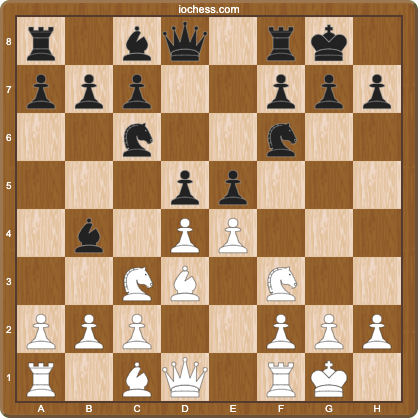
Build chunks from real games. Label formations like a fianchetto shield, a minority attack structure, or a typical mating net as single units. Study master positions and reconstruct them from memory, aiming to spot 3 to 5 piece groupings that function together, for example battery plus decoy, or blockade plus outpost.
Training tip: present chunks sequentially. Pause on each cluster before scanning the next one. Break complex positions into component patterns, then rebuild them mentally to force your brain to encode the right relationships. The classic reference here is Adriaan de Groot's 1946 thesis "Thought and Choice in Chess," which found masters do not calculate deeper than strong amateurs, they simply recognize better candidate positions.
2. Apply Spaced Repetition for Long-Term Pattern Retention
Schedule reviews just before you forget. After learning a tactic or opening line, review it after one day, three days, one week, two weeks, then monthly. Tools like Anki automate intervals, but a dated notebook works. This timing exploits the spacing effect to shift patterns into long-term memory.
Target high frequency patterns. Back rank tactics, pins, knight forks, and skewers appear constantly in club games. Create flashcards from your own games showing the position and the key cue, for example "loose defender on c6," or "weak dark squares around g7," to reinforce idea plus move order rather than isolated moves.
The spacing effect, documented from Ebbinghaus (1885) onward and confirmed in dozens of meta-analyses since, applies directly to chess positions, openings, and endgame techniques. For a practical framework that combines spaced review with structured practice, see the DarkSquares chess visualization training path.
3. Expand Working Memory Through Visualization Drills
Chess taxes working memory by asking you to hold evolving positions and candidate lines in mind. Miller's 1956 paper "The Magical Number Seven, Plus or Minus Two" set the classic working memory limit at around seven items, though more recent work by Cowan (2001) refined the figure to roughly four pure chunks. Either way, chunking expands effective capacity dramatically: experts use chunks, not individual pieces, as their working memory units (Chase and Simon, 1973).
Use progressive complexity. Hold four piece locations, then five, then six. Train with realistic structures from real games, not scattered random pieces, since chunking relies on meaningful patterns.
Practical drill: study a middlegame for 30 seconds, hide the board, then calculate a three move sequence for both sides. Increase depth and piece count weekly. For structured progressions of this drill, the DarkSquares visualization trainer ramps difficulty automatically.
4. Build Pattern Recognition Through High-Volume Tactical Training
Pattern recognition is a stronger predictor of improvement than raw search depth for developing players. de Groot's protocol, where players verbalize their thinking, showed that masters consider roughly the same number of candidate moves as amateurs but start from better candidates because they recognize the position type instantly.
The Polgar approach illustrates the training path. Laszlo Polgar emphasized massive volumes of tactical problems so patterns become automatic. Master-level repertoires hold tens of thousands of position chunks accumulated over years of deliberate study (Simon and Gilmartin, 1973; Gobet and Simon, 1996).
Prioritize volume and speed. Solve 20 to 30 easy to moderate puzzles daily, emphasizing discovered attacks, deflections, and removing the defender. Track solve times to verify growing automaticity and faster first-move identification.
5. Use Mnemonic Devices for Opening Repertoire Retention
Mnemonics tie abstract move orders to vivid cues. In the King's Indian Defense, imagine the king goes home, the fianchetto builds a shield, then the f5 pawn storm begins. For the Sicilian Dragon, picture the kingside pawn head forming a dragon's jaw to cue piece placement and themes.
Mix story, image, and principle. Link Benko Gambit ideas to landmarks, for example the a and b files open into a permanent queenside initiative. These concrete anchors create multiple retrieval paths under time pressure.
Layer mnemonics into your reviews. When spaced repetition surfaces a card, recall both the exact moves and the image or story. Dual encoding strengthens recall and reduces collapse under stress.
6. Practice Deliberate Position Reconstruction
Position reconstruction trains chunk formation directly. In Chase and Simon's framework, experience builds larger chunks so you store groups, not single pieces. Masters recall far more pieces from real game positions than class players when shown a position briefly, and no more than class players on random arrangements.
Protocol: display a master position for 5 to 10 seconds, remove it, then rebuild it on a blank board. Begin with 8 to 12 pieces, then increase complexity. Compare your result to the original and log systematic misses, for example wrong color complex, missed backward pawn, or mislocated defender.
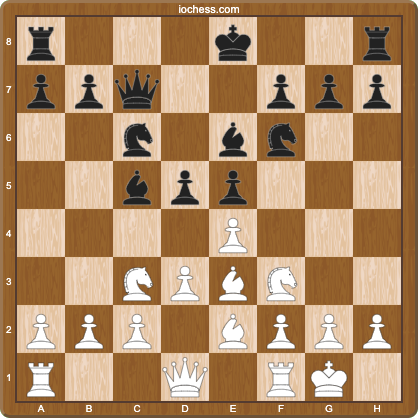
Ten to fifteen minutes daily of reconstruction accelerates chunk acquisition and board vision, especially if you focus on your own opening tabiyas and recurring middlegame structures.
7. Integrate Blindfold Training for Mental Board Representation
Blindfold chess, playing without sight of the board, drives intense neural engagement, and is part of the wider case for why chess is good for your brain. A 2024 graph-theory study in Frontiers in Psychology (PMC11442243) compared the cognitive connectome of chess players against controls and found that players' networks reorganize into a more streamlined three-module structure (versus four in non-players), suggesting tighter integration between visual, verbal, and executive functions. Earlier imaging work by Bilalić and colleagues (2011, Journal of Neuroscience) showed chess experts activate the fusiform face area when viewing real chess positions, processing board patterns the way most people process faces.
Mental rehearsal aids consolidation. Blindfold drills force precise spatial mapping because you cannot offload any work to the physical board.
Start small. Two to four short sessions per week are enough. Rebuild a simple position from memory and calculate one move each side before checking. Ten minute coordinate drills, for example naming attacked squares or solving a basic tactic without sight of the board, sharpen visualization fast. For structure, see the DarkSquares blindfold chess learning hub, follow our complete guide to mental chess training, and complement it with the square-colors trainer.
8. Employ Interleaved Practice for Flexible Pattern Retrieval
Mix problem types in one session. Instead of 20 pins in a row, alternate pins, forks, skewers, clearance, and discovered attacks. Interleaving forces discrimination on every item, the same decision you must make during a game when patterns are not labeled.
Blocked practice feels easier, but it inflates short-term performance and weakens transfer. Research across skill domains shows interleaving improves long-term retention and application. Build mixed sets that rotate tactical themes, insert an endgame study between opening cards, or shuffle strategy puzzles with calculation drills.
Combine time spacing with content mixing. Use spaced repetition to schedule reviews, then interleave different motif cards inside each session. This adds temporal distance and cognitive variation.
Conclusion
Best fast gains, do 20 to 30 tactical puzzles daily and add 10 minutes of position reconstruction. Best for opening retention, pair spaced repetition with vivid mnemonics tied to plans and landmarks. Best for calculation and board vision, run progressive visualization drills and short blindfold sessions twice weekly. Best foundation, build chunking skill and interleave motifs to speed pattern selection.
Micro action, choose two methods today and schedule 15 minutes daily for the next 14 days. Create a 25 problem mixed tactics set and build five opening flashcards with images or stories before your next session.
If you want a ready plan, start here, begin your structured memory training, then track puzzle time, recall accuracy, and opening test scores to confirm progress on the board.
Related reading
Frequently Asked Questions
How long does chess memory training take to show results?
Most club players notice faster pattern recognition within 2 to 3 weeks of daily 15-minute sessions, and measurable rating gains after 8 to 12 weeks. Tactical solve times typically drop 20 to 30 percent in the first month if you stick to interleaved spaced repetition. Track your puzzle accuracy and average solve time weekly to confirm the curve. For a structured 6 to 12 week plan, follow the DarkSquares <a href="https://darksquares.net/learn/chess-visualization" rel="noopener noreferrer" target="_blank">chess visualization training</a> path.
What is the difference between chess memory and chess visualization?
Memory stores patterns: chunks, opening lines, tabiya structures, mating nets. Visualization manipulates them: holding a future position in mind, calculating without moving pieces, projecting an opponent's reply. Memory is the database, visualization is the query engine. Strong calculation requires both. The chunk library described in this article feeds the mental-board work covered in the DarkSquares <a href="https://darksquares.net/learn/chess-visualization" rel="noopener noreferrer" target="_blank">chess visualization training</a> hub.
Is Anki effective for chess memory training?
Yes, with caveats. Anki is excellent for opening lines, tactical motifs, and named endgame positions where the cue-answer mapping is clear. It is weaker for full middlegames where understanding matters more than recall. Use Anki for forced sequences and theoretical endings (Lucena, Philidor, K+P opposition); use guided puzzle trainers and reconstruction drills for everything else. Avoid card decks longer than 20 minutes per session, since fatigue erodes pattern encoding.
How many tactical puzzles should I solve per day to build memory?
20 to 30 mixed-motif puzzles daily is the sweet spot for most club players. Below 15, exposure is too thin to build chunks. Above 50, fatigue and pattern blurring hurt retention. Quality matters more than count: solve mentally first, write your line, then verify. Track solve accuracy by motif (forks, pins, deflections) and rotate themes weekly so interleaving forces discrimination.
Does blindfold chess training improve regular game memory?
Yes. Blindfold practice forces you to encode positions without visual scaffolding, which strengthens the chunk-retrieval system you also use during sighted play. Players who add 10 minutes of blindfold reconstruction to their routine typically report faster threat-spotting and steadier middlegame calculation within 4 to 6 weeks. Start with 4-piece reconstructions on the DarkSquares <a href="https://darksquares.net/learn/blindfold-chess" rel="noopener noreferrer" target="_blank">blindfold chess</a> path before scaling to full games.
Last updated
Related Articles
Is Chess Good for Your Brain? What the Science Actually Says
Short answer: yes, chess is a genuine mental workout, but the popular version of the claim is overhyped. Playing chess reliably trains a cluster of do…
Antoine · 7 min read

Is Being Good at Chess a Sign of Intelligence?
Short answer: only partly. Being good at chess correlates modestly with general cognitive ability, but the link is far weaker than most people assume.…
Antoine · 6 min read

How to Train Chess Visualization: Pick the Right Trainer and Plan
Most club players lose the position after 2–3 moves when calculating, then blunder under pressure. You can change that in 4–8 weeks with a focused rou…
Antoine · 10 min read