
Most teams still treat modeling like enterprise software, pricey, complex, and reserved for specialists. That assumption burns time and budget. Many organizations now use AI in various business functions. Creating a Conceptualization Model is not academic theory. It is a fast way to show what exists and how it connects, before code or contracts lock in bad choices. Done well, it cuts rework, tames scope creep, and aligns designers, developers, and sponsors on the same picture.
The common misunderstanding about models
The main misconception is relevance, not skill. Models are seen as artifacts for architects, not tools for product managers sketching user journeys or ops leads mapping bottlenecks. This view comes from how modeling gets taught. Courses push notation like UML, ERD, and BPMN. Vendors pitch governance suites that imply specialists and licenses. Teams conclude modeling means buying software and hiring experts, so they skip it. According to John Singer in the article "Conceptual Data Modeling: An Examination of Trends" on DATAVERSITY.net, "It's really not what we need to accomplish, but it's all we have." Many organizations produce models to satisfy documentation, not to answer stakeholder questions or drive decisions. Skipping models compounds mistakes. Features get built on assumptions. Developers and designers interpret the same requirement differently. Stakeholders spot mismatches after launch, when changes cost more. The effort required for early modeling is relatively minor compared to issues such as rework, scope creep, and unsuccessful releases. Treat models as thinking tools, not final deliverables. A quick sketch showing how three systems interact prevents more trouble than a 40-page spec that no one reads.
Why traditional approaches often fall short
Classic methods assumed stable domains. The hierarchical systems of the 1970s worked when rules changed slowly. "Today, a significant portion of enterprise data is created and processed at the edge, not in centralized systems, reflecting a shift towards decentralized computing environments." The approval process for traditional waterfall models often lags behind evolving project requirements. As trends in modeling continue to evolve, there is a shift towards integrating AI, language-based APIs, and multimodal capabilities to address limitations inherent in traditional methods.
Relational modeling flattens meaning. Peter Chen warned, "The relational model is based on relational theory, but it may lose some important semantic information about the real world." When you turn human concepts into tables and joins, signals like "trust influences purchases" vanish into foreign keys.
The cost shows up in production. A major bank invested significant time in creating a loan approval system based on conceptual modeling, reflecting the trend towards integrating AI and hybrid human-AI systems to enhance traditional modeling approaches. The build was clean. The model reduced "risk assessment" to a yes/no flag and missed how loan officers actually judged risk. Post-launch, manual overrides hit 60% because the system excluded real scenarios.
Modern stacks multiply perspectives. Teams mix graph databases for relationships, document stores for flexibility, and time-series engines for telemetry. Forcing one schema and one truth hides necessary views. You need a conceptual layer that tolerates multiple technical implementations.
The Semantic Loss Problem
When you convert conceptual models to implementation, meaning often gets stripped away. Capture timing, sentiment, and intent in the conceptual model before technical constraints erase them.
AI accelerates drift. The market for conceptual data modeling is expanding, with current trends highlighting the incorporation of AI and large language models to improve capabilities. Machine learning systems change behavior as data shifts. A model drawn in January can be wrong by June. Treat models as living assets that evolve with the system.
Understanding the essence of a conceptual model
A conceptual model shows the core things in your domain and how they relate. It is the picture of ideas and their relationships before you pick tools or build. It captures the minimum structure needed to explain the system to multiple audiences.
Think of it like a road map. You don’t draw every building, you show routes, intersections, and landmarks. Good models are intuitive to non-experts, technology neutral, and mirror real behavior, not wishful process diagrams. When teams debate a feature, the model becomes the shared reference that ends opinion loops and exposes missing rules.
Building your conceptual model: A step-by-step guide

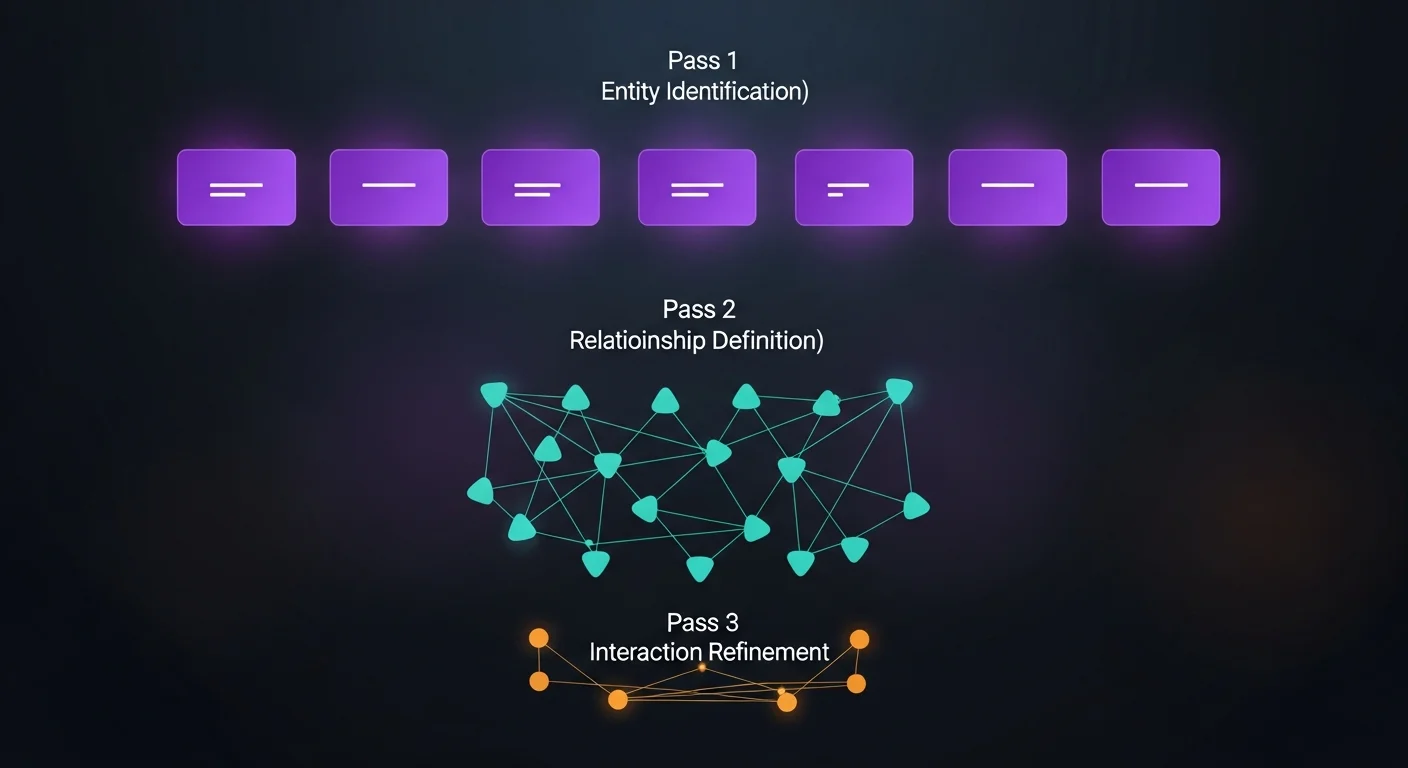
Build from messy reality toward clarity. Work in three passes: identify what matters, make it visual, then cut what does not change decisions.
Identifying key ideas and relationships
List the entity types in your domain. For a fitness app: Member, Workout, Equipment, Trainer, Session. Each must be tracked independently. Stop at 5–7 core entities. More suggests implementation detail is leaking in.
Write relationships as verbs with direction. A Member schedules a Session. A Session requires Equipment and may include a Trainer. “Schedules” is not “attends,” even for the same pair. Precision here prevents generic, meaningless links later.
Read each relationship aloud as a sentence. “Member schedules Session” works. “Session schedules Member” does not. Every entity should appear in at least two relationships. Isolated entities belong later at the attribute or implementation level.
Crafting a visual structure
Draw boxes for entities and arrows for relationships. Label each arrow with the verb. Place related entities near each other to reveal dependencies at a glance.
Add cardinality where it changes rules. A Session uses multiple pieces of Equipment, one-to-many. A Member can schedule multiple Sessions and each Session can include multiple Members, many-to-many. Visual models significantly reduce miscommunication compared to text-only specifications.
Pick one notation, UML or ER, and stick with it. Mixed styles slow readers and trigger avoidable misunderstandings.
Iterating for clarity and precision
Test your first draft with someone outside your team. Note where they hesitate or ask questions. Rename relationships until readers interpret them correctly without you explaining the diagram.
Remove duplicates across abstraction levels. If “User” and “Member” represent the same person, merge them and add attributes for subtypes. Cut relationships that do not change behavior. If “Member knows Trainer” does not affect scheduling, remove it.
Run edge cases from real operations. Can the model represent cancellations, no-shows, or paused memberships? If it breaks, add only the minimum complexity needed. Stop when stakeholders can answer new questions with the model alone.
Want guided practice? Use these structured exercises to build diagramming skill and pattern recognition.
Key takeaways and next steps
Conceptual models turn fuzzy ideas into testable structure. They surface assumptions early, preserve business meaning, and align teams before code, contracts, or data models harden decisions. Generative AI can draft diagrams faster, but you must verify that every relationship reflects real business logic.
Start with one confused feature or workflow. Sketch three to seven entities and the verbs between them. Hand it to someone outside your team and ask them to answer a real question using only the diagram. Refine where they stumble.
Key takeaways:
Model early to expose assumptions and prevent rework and scope creep.
Keep models technology neutral and focused on real behavior and rules.
Use verbs and cardinality to capture meaning that tables often hide.
Test with outsiders, and refine labels until they need no explanation.
Treat models as living assets that evolve with the system.
Today's micro-action: Draw three boxes for entities in your current project and label the relationships with precise verbs. Show it to a colleague and note their questions.
Frequently Asked Questions

Antoine Tamano
Angers
I’m Antoine Tamano, founder of Instablog. After working with startups and larger companies, I saw how hard it was to keep up with blogging, even when the value was clear. Instablog was born from a simple idea: make blogging easier using what’s already there. Here, I share what I’ve learned building Instablog and why smart content should be core to any growth strategy.


