
Most players chase tactics, yet many master wins come from color-complex control and timed pressure. Dark Squares vs Noir Chess: Which is Better for You? depends on how you think under stress and which skills you want to train. Dark-square play trades fireworks for squeeze: you lock key squares, limit bishops, and fix pawns. Noir chess tests calculation speed and nerve, rewarding fast, forcing attacks. This guide shows how each style works, when it scores, and how to pick the one that fits your games.
Understanding the dark squares strategy
Dark-square play targets the 32 dark squares with concrete plans: restrict the opponent's dark-squared bishop, anchor knights on c5, e4, or d6, and fix enemy pawns on light squares so they cannot challenge your grip. When you dominate these squares, the king's flight squares shrink and key pieces lose mobility, which forces slow, defensive moves. Classic examples show how the squeeze builds. In Fischer–Spassky, Game 6 (1972), Fischer clamped the queenside dark squares, then improved without allowing counterplay. Magnus Carlsen often wins level endgames by parking a knight on a stable dark outpost and pushing only when the defender runs out of useful moves. Three practical edges follow. You gain a structural advantage that survives trades, you force passive defense while improving piece placement, and you keep plans flexible because color-complex control rarely commits you to one pawn break. This matters in long games where each small improvement compounds. A common blueprint appears against the King's Indian Defense. White plants pawns on e4 and d5 to lock the center on light squares, then installs a knight on c5 or e4. Black's g7 bishop hits a wall, queenside breaks arrive first, and Black cannot challenge the outpost without concessions. Similar themes arise in the French Defense, where dark-square holes on e5 or c5 become permanent targets after ...e6. Technique converts edges into wins. Trade your light-squared bishop when it strengthens dark control, double rooks on files that touch dark-square entry points, and time pawn breaks to create new dark-square weaknesses near the king. Strong players combine board vision with
memory techniques for chess visualization,
systematic approaches to improving visualization skills, and
methods for simplifying calculations in chessto track these multi-move plans accurately.
Developing strong visualization skillsalso speeds up your move selection when several quiet improvements look similar.
Exploring the allure of noir chess
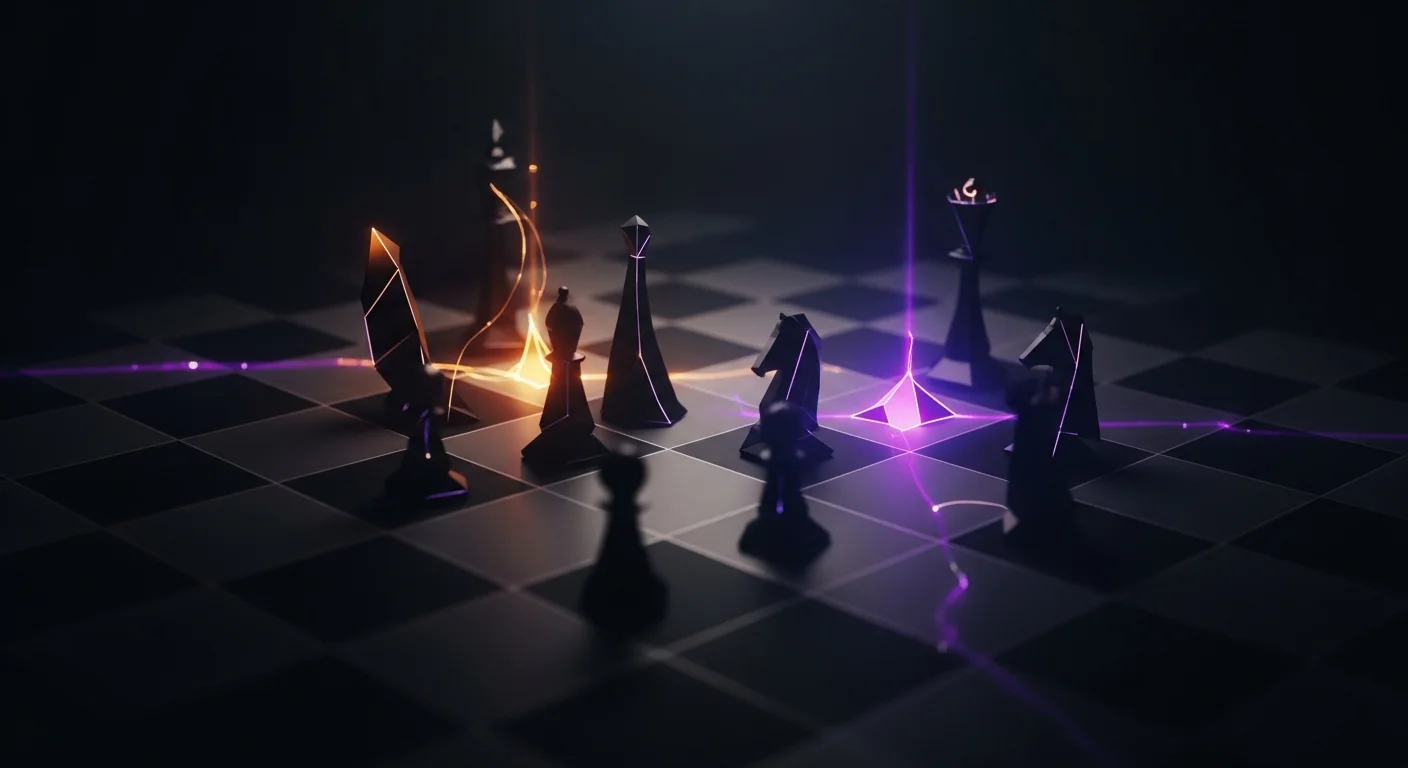
Noir chess prioritizes immediate pressure: open lines fast, aim at the king, and create two or more threats per move. You often invest material, for example sacrificing a rook to rip files, then calculate concrete sequences that keep the initiative. The style rewards players who can spot forcing moves under time pressure and trust their evaluation when retreat equals defeat.
If the attack stalls, you face an exposed king or material deficits. Good defenders neutralize threats, then win the endgame.
Kasparov–Topalov, Wijk aan Zee 1999, is the template. After 24.Rxd4!!, Kasparov's pieces overwhelmed the kingside while Black's extra material sat on the queenside, and the attack finished in a forced mate. The key was commitment: once the rook fell, only precise, forcing play worked. Half-measures would have lost on the spot. Noir chess thrives in faster controls. In rapid and blitz, defenders miss "only moves" more often, so sustained initiative converts to points. Aggressive repertoires tend to perform better as time runs out due to an increase in calculation errors under pressure. Training should mirror this: practice mating nets, clearance sacrifices, and deflection motifs until they become automatic.
Training focused on tactical combinationsbuilds the pattern bank you need to spot the right sacrifices quickly. Psychology is part of the edge. Immediate threats push positional players into time trouble, where even a single inaccuracy collapses the defense. Once the king is exposed and files are open, the rest of the attack often becomes a series of checks and captures that require little guesswork.
Why players choose one over the other
Style fit predicts results. Dark-square players enjoy long plans, accept small, durable edges, and stay patient in endgames. Their games often run longer, and they blunder less late because plans are stable. Attack-first players prefer concrete targets, forcing moves, and visible progress on the king, which makes noir chess feel natural in crowded middlegames. Risk tolerance separates them more than rating. Dark-square control accepts short-term tactical discomfort for long-term structure, like allowing doubled pawns to anchor a knight. Noir chess flips the bet, spending material to buy time and initiative. Both choices are rational if you understand the trade and the clock. Time management shows another split. Dark-square play spreads focus across moves 15, 30, and 45, where one inaccuracy can waste a plan. Noir chess front-loads effort into the attack; once lines open, converting often becomes mechanical. Players who gain rating in blitz usually favor noir patterns, while those who excel in classical often score with dark-square squeezes.
Analyze a complex middlegame for 15 minutes without moving pieces. If you see plans and squares, favor dark squares; if you chase forcing lines, favor noir.
Context matters. Must‑win rounds against solid opponents invite noir chess, where even equal positions carry winning chances. Protecting rating or facing a higher seed often favors dark-square control, which reduces risk by limiting counterplay. "Chess.com members who are strong improvers demonstrate adaptability by switching strategies based on changing pairings or stakes." The most practical path is bilingual chess. Build a default style, then learn to pivot. Players who can shift from restraint to attack on cue, for example after a favorable pawn break, score better than single-speed specialists.
Evaluating the evidence: impact on performance
Public databases do not tag games by square-complex strategy, so clean comparisons remain rare. According to the Dark Squares blog article "Dark Squares vs Noir Chess: Which is Better for You?" at
darksquares.net, the latest research discusses the distinct features and usage suitability of two prominent blindfold chess training apps, Dark Squares and Noir Chess, highlighting Dark Squares' structured modules and tracking features, while noting Noir Chess' inverted color puzzles. [Source: https://darksquares.net/blog/chess-improvement/dark-squares-vs-noir-chess-which-is-better-for-you] **According to "Dark Squares vs Noir Chess: Which is Better for You?" on the Dark Squares website (n.d.), "Dark Squares and Noir Chess are blindfold chess training apps, with Dark Squares offering a more comprehensive, structured system ideal for most players (especially 800-2400 ELO), while Noir Chess provides a n." You can read more
here.iche, unconventional approach via dark-themed puzzles better as a supplement.** Current research does not provide specific 2026 statistics and focuses mainly on qualitative features without detailed user metrics or performance benchmarks. ### Key Features of Dark Squares - **Structured, progressive training**: Starts with coordinate drills and square naming for beginners, advances to piece tracking, multi-piece coordination, and full-game AI practice with adaptive difficulty. - **Performance tracking and personalization**: Monitors sessions, identifies weak patterns (e.g., bishop diagonals), and generates targeted drills; users report significant improvement in specific skills like bishop visualization within two weeks. - **Strategy integration**: Links visualization to tactics (forks, pins), suiting intermediate players building a "mental board" for blindfold play; achieves full-game readiness in around three weeks of consistent use. - **Best for**: A broad ELO range (800-2400), offering comprehensive skill-building without overload. ### Key Features of Noir Chess - **Unconventional dark theme**: Uses inverted black/gray colors to disrupt visual patterns, forcing reliance on mental geometry and structure in tactical puzzles. - **Progressive challenges**: Simple 2-move tactics to multi-move tracking under time pressure; includes position recall from memory to bridge to blindfold play. - **Focused but limited**: No social features, ratings, analytics, or opponent matching; emphasizes variety to combat training staleness. - **Best for**: Players with basic visualization seeking fresh challenges; acts as a supplement rather than a standalone tool. ### Direct Comparison | Aspect | **Dark Squares** | **Noir Chess** | |---------------------|-------------------------------------------|-----------------------------------------| | **Training Style** | Layered modules (coordinates → full games), adaptive AI | Dark-themed puzzles, position recall | | **Tracking/Analytics** | Detailed performance flags, tailored drills | None | | **Target Users** | 800-2400 ELO, beginners to advanced | Intermediate+ needing variety | | **Strengths** | Comprehensive, time-efficient retention | Breaks pattern dependence, simulates stress | | **Drawbacks** | None noted | Lacks social/rating systems; limited recent feedback **Dark Squares is generally better for most users due to its complete system, progress tracking, and broad applicability, making it a primary tool for blindfold skill development.** Choose Noir Chess if you want a specialized add-on for unconventional visualization training. Other apps like Chess.com or Lichess offer blindfold modes but lack Dark Squares' specialization. For a detailed comparison of how Dark Squares stacks up against Chess.com specifically, see our guide on
dark squares vs chess.com: which to choose?Note: "Dark Squares" also refers to a memoir by IM Danny Rensch, but context often relates to the app comparison. Still, the scale of online play offers context: Chess.com reported 2.5 billion games in Q4 2025 and 8.7 million daily active users, which makes pattern hunting possible even without perfect labels. Manual review of master games shows dark-square plans in roughly 60–70% of strategic middlegames, especially after structures like the French or closed Sicilians. Noir attacks appear when early pawn breaks expose the king or when defenders weaken dark squares with fianchettos. The style choice often flips after a single pawn move, which is why preplanned loyalty loses games. Niemann's 2022 upset of Carlsen highlighted dark-square technique: a knight on d5 and bishop pair tightened control around Black's king until activity won out. This is evidence of execution, not universal superiority. In contrast, many top-level wins feature timely sacrifices that blow the position open, then force mate or decisive material gains within a handful of moves.
Watch midgame pivots. In the 2024 Candidates, players often switched styles right after a center break, exploiting fresh holes or a newly exposed king.
Players rated 2700+ rarely precommit. They choose squares or attacks based on access and time control, then change course if a pawn break shifts the evaluation. Coaches report a practical edge of 50–100 rating points for players who recognize, within a few moves, when to abandon one style and adopt the other. A clear takeaway follows. Dark-square control scores when you can plant stable outposts and your opponent lacks the right bishop or pawn lever to contest them. Noir chess scores when lines open toward the king and your calculation confirms a sustained initiative. Want faster board reads in both styles?
Practice identifying square colors instantlyto speed up your pattern recognition at critical moments.
Making your choice: which strategy suits you?
Start with honest self-assessment. If you reliably convert rook or minor‑piece endgames and enjoy small edges, dark squares likely fit your strengths. If you solve tactics fast and prefer sharp middlegames with forcing moves, noir chess aligns with your instincts. Rating bands suggest different payoffs. Below 1500, dark-square fundamentals teach board control without heavy theory. Above 1800, preparation drives results: deep attacking lines reward noir specialists, while refined maneuvering rewards dark-square experts who know typical pawn breaks and trades.
Testing both strategies systematically
Play ten games where your priority is dark-square control. Track positions where outposts, bishop quality, and pawn structure gave you clear plans, and note where you stalled. Repeat with noir chess for ten games. Push early pawn breaks, look for deflections and sacrifices, and record whether your attacks forced "only moves" or fizzled under defense. Measure thinking, not just points. Count how often you saw a five-move plan versus calculating move by move in time trouble. The easier mode under pressure is your current best fit.
Integration into regular practice
Train with curated positions. Spend 15 minutes daily on master games that feature your chosen style, pausing at the opening-to-middlegame handoff where color-complex commitments become irreversible. Align your openings. Dark-square players can use the French Defense or Closed Sicilian as Black and aim for dark outposts in Queen's Gambit lines as White. Noir players can choose the Open Sicilian, Scotch Gambit, or King's Gambit to open lines early. Test across time controls. Many players execute dark-square plans better with longer clocks, while noir attacks hit hardest in rapid and blitz. Compare results and blunder rates by control to confirm the match. Verify progress after 20–30 games. You should spend less time finding plans in your chosen style and reach your typical structures more often. If not, narrow your repertoire and repeat.
Adapting as you improve
Expect shifts every 200–300 rating points. Players who start with dark-square squeezes around 1400 often add reliable attacking lines by 1700, once their calculation improves. That change signals growth, not confusion. Opponents will test your comfort zone. If you lean dark squares, tactical players will fling pawns to drag you into a race. Stay disciplined: meet breaks with trades that restore your grip, or pivot to attack only when files actually open. Seasonal planning helps. Use dark-square reliability during tournament stretches, then explore new noir lines in training blocks. This separation protects your rating while expanding your toolkit.
Key takeaways
- Pick the style that matches your strengths: dark squares for planning and endgames, noir chess for tactics and speed.
- Test both for at least ten games each, and track thinking speed and clarity under time pressure.
- Build an opening set that feeds your plan, notates typical breaks, and repeats familiar structures.
- Expect your preference to evolve every few hundred rating points as skills improve.
- Flexibility wins: learn both styles well enough to pivot when the position changes.
Start with a quick audit: review your last five losses and label the cause as dark-square neglect or failed attack. Fix that theme first in your next training block. Ready to sharpen board vision for either path?
Train coordinate recognitionto cut calculation errors and reach your best positions faster.
Frequently Asked Questions
Last updated: Apr 5, 2026


