
The Best Chess Opening Trainers in 2026, Compared
Antoine6 min read

Table of contents
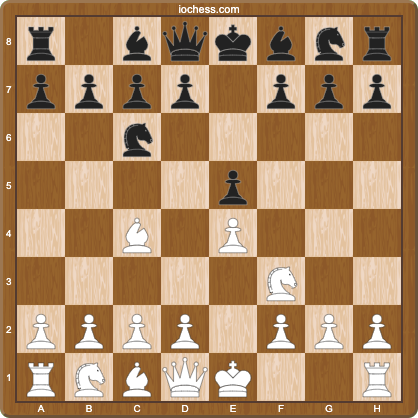
Studying openings is easy. Remembering them a week later, in a real game, is the hard part. That is the job of an opening trainer: not just to help you research lines, but to schedule them, drill them, and flag the exact moment you stray from your prep. This guide compares the best chess opening trainers in 2026 by the features that actually change your results, so you can pick the one that fits how you study.
How we compared them
Three things separate a real opening trainer from a static database: whether it schedules reviews with spaced repetition so lines stick, whether it connects to the games you actually play, and whether it tells you where you left your prep. We weighted those over raw content volume, because a huge library you never review is just an expensive bookmark.
1. ChessAtlas: the most complete repertoire trainer
ChessAtlas is a repertoire builder and trainer in one. You build your opening tree, and it schedules review of every line with FSRS spaced repetition so the moves stick instead of fading in a week. Its standout feature is deviation detection: import your online games and it pinpoints the exact move where you left your prep, then adds that position to your review queue. It also merges transpositions automatically and lets you fork ready-made repertoires from a course library.
It is the tool for the player who has bought opening courses but keeps forgetting them the moment a game leaves theory. It runs on the web and as native iOS and Android apps, and a free tier covers the core builder and trainer.
Trains: repertoire building, line retention, deviation spotting.
Platforms: Web, iOS, Android.
Pricing: Free tier with a variation cap; Premium adds unlimited variations, game import, and deviation detection.
Best for: club players who know theory but lose it under pressure. Try ChessAtlas free.
2. Chessbook: the strongest mobile-first option
Chessbook is a modern, mobile-first repertoire trainer with a fast interface and a data-driven approach to which moves are worth learning. It uses spaced repetition, handles transpositions, reviews your online games (Lichess and Chess.com) for opening mistakes, and even suggests middlegame plans for the openings you play. The free tier lets you add up to 400 moves, which is enough to test it seriously before paying.
If you do most of your studying on a phone, Chessbook is the most polished experience here. The trade-off is that a full two-color repertoire quickly outgrows the free move cap, so serious use means the Pro subscription.
Trains: repertoire building, retention, game review.
Platforms: Web, iOS, Android.
Pricing: Free up to 400 moves; Pro subscription for unlimited moves.
Best for: players who study mostly on mobile and want a slick, modern app.
3. Chessable: best if you want a titled author's course
Chessable pairs structured courses with a spaced-repetition trainer (MoveTrainer) so you drill a specific author's lines until they are automatic. The catalogue is enormous and much of it is written by strong titled players, so if you would rather follow a curated repertoire from a named coach than build your own, it is one of the deepest course libraries in chess.
The trade-off is cost and shape: full coverage means buying several courses, and the platform is built around consuming an author's content rather than constructing and maintaining your own tree from your games.
Trains: memorization of curated author repertoires.
Platforms: Web, iOS, Android.
Pricing: Some free courses; most quality content is paid per course, plus an optional Pro subscription.
Best for: learners who want a titled author's exact repertoire, drilled for them.
4. Lichess: the best free research tool
Lichess is free, open-source, and ad-free, and its opening explorer plus Studies feature make it an excellent place to research lines and build shareable opening trees. You can filter master and player databases to see what actually gets played and how it scores.
The gap is training: Lichess has no built-in spaced-repetition scheduler for your repertoire and no automatic deviation detection, so you have to drive review yourself or pair it with a dedicated trainer. For research on a zero budget, though, nothing beats it.
Trains: opening research and manual study.
Platforms: Web, iOS, Android.
Pricing: Free, donation-supported.
Best for: self-directed players who want a free explorer and study builder.
5. Chess.com: convenient if you already live there
Chess.com bundles opening lessons, an explorer, and analysis into the platform you may already play on. For casual improvement it is convenient, and the Lessons format is beginner-friendly.
As a dedicated repertoire trainer it is the shallowest option here: there is no full spaced-repetition scheduler for a custom two-color tree and no true deviation detection, and the deeper opening tools sit behind a premium membership. It is a fine starting point, not a specialist trainer.
Trains: casual opening lessons and exploration.
Platforms: Web, iOS, Android.
Pricing: Free tier with ads; premium tiers unlock more tools.
Best for: existing Chess.com users who want light opening study in one place.
Side-by-side comparison
Tool | Spaced repetition | Deviation / game review | Platforms | Pricing |
|---|---|---|---|---|
ChessAtlas | Yes (FSRS) | Yes, automatic | Web, iOS, Android | Free; Premium subscription |
Chessbook | Yes | Yes, game review | Web, iOS, Android | Free to 400 moves; Pro |
Chessable | Yes (MoveTrainer) | No | Web, iOS, Android | Per course + optional Pro |
Lichess | No | No | Web, iOS, Android | Free |
Chess.com | No (not for custom trees) | No | Web, iOS, Android | Free; premium tiers |
Which one should you pick?
If you want the most complete retention loop, with automatic deviation detection turning your real games into review, start with ChessAtlas (on web, iOS, or Android). If you study almost entirely on a phone, Chessbook is the slickest mobile-first experience. If you would rather buy a titled author's ready-made repertoire, Chessable has the deepest catalogue. And if your budget is zero, pair Lichess for research with any dedicated trainer for the scheduling it lacks.
Whatever you choose, the feature that matters most is the one people skip: automatic review of the lines you already studied. A repertoire you never revisit is the single most common reason opening prep fails.
What an opening trainer will not fix
One caveat worth naming before you buy anything: an opening trainer only carries you through the first ten or fifteen moves. If your games go wrong once the position leaves theory, the constraint is board vision and calculation rather than preparation, and no repertoire tool trains that. Our guide to chess visualization training covers that side, and the free visualization exercises are the drills themselves.
Disclosure: DarkSquares, the site publishing this blog, is built by the same team as ChessAtlas, the tool ranked first here. We have listed the main alternatives with their real trade-offs so you can compare and judge for yourself.
Last updated
Related Articles

The Best Chess Endgame Training Tools in 2026
Endgames are the purest calculation in chess. With few pieces on the board, every move counts exactly, and there is no middlegame fog to hide a mistak…
Antoine · 5 min read

Chess Training App Benefits: Why Digital Tools Work for Visualization
Disclosure: DarkSquares is our product. This guide uses it as the worked example throughout, so weigh our perspective accordingly. Picture a master ca…
Antoine · 9 min read

Dark Squares vs Chess.com: Which Platform Is Better?
Choosing a chess platform is tough when options look similar on the surface. Chess.com has one of the largest user bases in chess and offers a variety…
Antoine Tamano · 7 min read