
Alekhine's 1933 Chicago World Record: How 32 Blindfold Games Changed Chess
Antoine7 min read

Table of contents
On July 16, 1933, in Chicago (some sources date it to 1934), Alexander Alekhine played 32 simultaneous blindfold games, scoring 19 wins, 9 draws, and 4 losses at the Century of Progress Exposition, with Edward Lasker as referee. The exhibition reportedly lasted many hours. Alekhine's 1933 Chicago World Record: How 32 Blindfold Games Changed Chess is more than a headline. The feat forced chess to rethink training, visualization, and mental limits. It showed that structured memory and planning can track over 1,000 pieces without sight, and it sparked research, methods, and debates that still shape how players practice today.
What Was Alekhine's 1933 Chicago World Record?
On that day in Chicago, World Champion Alexander Alekhine set a world record by playing 32 blindfold games at once, finishing with 19 wins, 9 draws, and 4 losses after many hours of play. The exhibition was staged at the Century of Progress Exposition, the World's Fair that ran in Chicago that summer, and Edward Lasker served as referee. The feat broke Belgian master George Koltanowski's 30-board Antwerp record, set on May 10, 1931 (+20 =10).
In blindfold play, competitors cannot see or touch the boards. All moves are called using chess notation, and assistants carry out moves at the tables. Players must hold every position in memory, updating each game move by move. For a deeper tour of how this category of feat evolved, see our guide to blindfold chess world records.
How the Exhibition Worked
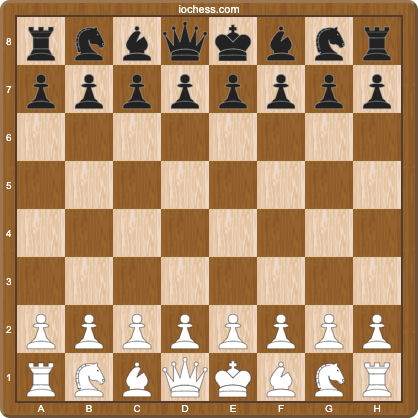
Alekhine sat with his back to the 32 boards. A teller relayed each opponent's move to him in algebraic notation, then executed Alekhine's replies on the boards and reported the new positions. For many hours he tracked dozens of evolving positions, amounting to more than 1,000 pieces in play, without a single glance.
This display capped a steady climb. In 1924 at New York's Alamac Hotel he played 26 blindfold games, scoring 16 wins, 5 losses, and 5 draws. In February 1925 in Paris he faced 28 teams of four players, scoring 22 wins, 3 losses, and 3 draws.
The Progression of Blindfold Records
Alekhine's mark was surpassed on September 20, 1937, in Edinburgh, when George Koltanowski played 34 blindfold games, scoring 24 wins and 10 draws, a result that held for a decade until Najdorf surpassed it in 1947. Miguel Najdorf then pushed the bar to 45 boards in São Paulo on January 21, 1947, scoring +39 =4 -2, a result that still holds the Guinness record for highest win percentage in a simultaneous blindfold display (86.6%). Marc Lang reached 46 in 2011, and the current world record for total boards is 48 by Timur Gareyev at UNLV, achieved on December 3 and 4, 2016.
Why Does This Record Matter?
Demonstrating Cognitive Limits
Alekhine's performance showed that disciplined training can handle extreme cognitive load. According to Bill Wall's article, Alfred Binet began studying chess expertise in 1893, focusing on pattern recognition and meaning-making rather than raw visual memory. Binet found that chess mastery involves "abstract visual memory" by storing positions as integrated patterns rather than photographic snapshots, and he concluded that "chess memory is not a memory of sensations, but a memory of ideas" (source). Alekhine echoed this view, reporting that he relied on "logical memory," prioritizing key features of a position instead of picturing a board like a photograph. The scientific basis for this view is unpacked in our piece on the mental benefits of blindfold chess.
Legitimizing Blindfold Training
Simultaneous blindfold shows were often dismissed as tricks, and the USSR restricted public blindfold simuls in 1930 on health-risk grounds not supported by medical evidence. Yet coaches have long recommended limited blindfold practice to strengthen calculation and board vision. For drills that build these skills safely, see our structured blindfold training regimen.
Challenging Health Misconceptions
Hearst and Knott's 2009 book Blindfold Chess: History, Psychology, Techniques, Champions, World Records, and Important Games (McFarland) found that claims of lasting harm from blindfold exhibitions lack evidence. Players do report greater fatigue than in sighted play, even with faster time controls, but with rest and preparation there is no sign of cognitive damage. For a full breakdown, read what science actually says about blindfold chess safety.
How Did This Achievement Work?
Memory Techniques
Blindfold masters do not memorize full boards like pictures. They group pieces into meaningful patterns, focus on critical sectors, and track pawn structures, open files, and key diagonals. Alekhine described an abstract, logic-driven representation of the game, which let him ignore irrelevant details and keep essential features active in memory. Our guide to chess memory techniques breaks down the same chunking approach for modern players.
Progressive Skill Development
Alekhine built capacity in steps: 26 boards in 1924, 28 teams in 1925, then 32 in 1933. The same ladder works today. Start with coordinate recognition and square color identification, then move to short blindfold drills. A structured path, from single-piece tours to full games, is laid out in our 7-step beginner journey.
Strategic Focus Over Total Recall
Alekhine argued that blindfold chess is not a memory stunt. The goal is to use the stored position to choose plans, such as a central break or a kingside attack, then carry them through across many boards without losing the thread. This strategic lens is why serious training programs emphasize pattern chunks over raw recall, a theme explored in our core pillar on chess visualization training.
Real-World Examples and Impact
The 1934 Tandem Exhibition
In 1934, Alekhine and George Koltanowski staged a tandem blindfold exhibition in Antwerp, playing six teams side by side while both remained unsighted, scoring +3 =2 -1 over roughly five hours. The event showed that blindfold play can be coordinated between experts, with moves alternated while neither player glanced at the boards.
Modern Applications in Training
Blindfold practice strengthens calculation by forcing a live mental image of piece placement and move sequences. The skill carries directly into sighted chess, improving board vision and long forcing lines. Today's players can use progressive training exercises to develop these abilities without a physical board.
Cognitive Science Validation
Neuroscience studies show increased theta and alpha power during demanding chess tasks, with the highest alpha levels observed in blindfold conditions. This pattern suggests that blindfold play recruits different cognitive processes than regular over-the-board games, offering distinct training benefits.
Common Misconceptions About Blindfold Chess

Misconception: You Need Photographic Memory
The reality is different. George Koltanowski, among the greatest blindfold players, said his mind worked like "a gramophone record," replaying move sequences. Many strong players use abstract patterns or verbal move chains rather than vivid images.
Misconception: It's Dangerous for Your Mental Health
The 1930 Soviet restriction fueled fears, but research does not support claims of harm. Blindfold exhibitions are tiring, similar to other high-load cognitive tasks, yet with limits on duration, breaks, and recovery, players avoid adverse effects.
Misconception: Only Elite Players Can Benefit
Benefits are not confined to grandmasters. Evidence suggests two-way influence: blindfold work can raise playing strength, and improved skill makes blindfold easier. Beginners can start with simple drills. See our guide to 9 essential blindfold exercises for every level to build a base.
Conclusion
- On July 16, 1933 (some sources date it to 1934), Alekhine set a 32-board blindfold record in Chicago, scoring 19-9-4 in a session reportedly lasting many hours under Edward Lasker's supervision, breaking Koltanowski's 30-board Antwerp mark (May 10, 1931, +20 =10).
- He relied on logical memory and patterns, not mental photos, echoing insights dating back to Alfred Binet's 1890s work.
- Blindfold training improves calculation and board vision, with studies showing faster tactics and rating gains after structured practice.
- Health fears are overstated. Hearst and Knott (2009) found no evidence of lasting harm when rest is respected.
Micro-action: Spend 10 minutes on blindfold coordinates today, then add a short no-board tactics drill. Repeat three times this week and log results.
Want a guided path? Start with our structured blindfold training regimen, then run the progressive exercises and test yourself on square color drills.
Frequently Asked Questions
Was Alekhine's 1933 Chicago record verified by an independent body?
Yes. Edward Lasker served as referee on-site at the Century of Progress Exposition, and the Chicago Daily Tribune covered the event with named participants. Guinness was not yet in the business of certifying simultaneous blindfold records in 1933 (the record book launched in 1955), so contemporary press coverage and Lasker's referee status are the primary historical sources.
Why did the Soviet Union ban blindfold simultaneous exhibitions in 1930?
The 1930 ban cited unverified claims of mental health risks, but Hearst and Knott (2009) documented that no medical evidence supported those claims at the time or since. The decision was political rather than clinical, reflecting Soviet ideological positions on individual cognitive feats over collective sport.
Are simultaneous blindfold records still being broken in the 21st century?
The current world record is held by Timur Gareyev with 48 boards at UNLV in December 2016 (+35 =7 -6, Guinness certified in 2017). Marc Lang reached 46 in 2011 before that. Records have moved slowly since the 1990s, suggesting the upper bound is shaped by physical endurance over the 14 to 24 hour timeframe rather than by raw cognitive capacity.
Last updated
Related Articles
Magnus Carlsen and Blindfold Chess: How the Champion Trains Without the Board
Magnus Carlsen and blindfold chess go beyond a stunt. In New York in 2015 he tracked three boards with clocks, and in Vienna he faced five opponents w…
Antoine · 8 min read
How to Choose a Blindfold Chess Trainer: Features That Actually Matter
Disclosure: Dark Squares is our product. We have aimed for a fair comparison, but readers should weigh our perspective accordingly. Blindfold training…
Antoine · 7 min read

10 Classic Drills Masters Use to Train Blindfold Visualization
Blindfold chess is not magic. Miguel Najdorf played a 45-board blindfold simul in São Paulo in 1947, and George Koltanowski set a 56-game consecutive…
Antoine · 7 min read