
Board Vision in Chess: Drills to Instantly See Every Square
Antoine12 min read

Table of contents
Strong board vision chess skills, the ability to take in every square and piece at a glance, can cut your blunders fast. With 10 to 30 minutes a day, many players reduce one-move mistakes and spot tactics faster within 2 to 4 weeks. This guide turns square recognition, piece pathways, and full-board scanning into daily habits. You will train coordinates and colors, build knight and bishop routes, and apply a strict pre-move scan in every game. Follow the steps, track accuracy and blunders per game, and expect a clear improvement in both speed and confidence.
What You'll Need Before Starting
To follow this training program effectively, gather these basic resources:
- A physical chess board and pieces, or an online board such as the DarkSquares coordinate trainer
- A timer or stopwatch to track drill sessions and monitor progress
- A notebook or digital tracking tool to record your accuracy scores and blunder counts
- Optional: A recording device, phone voice memos work, for audio visualization exercises
No prior memorization is required. Short, focused sets beat marathons: do 5 to 10 minute blocks, repeat daily, and prioritize accuracy over volume.
Step 1: Master Square Coordinates and Colors
Train instant square and color recall for 5 to 10 minutes a day. This stops orientation pauses, speeds tactics, and reduces basic errors during time pressure.
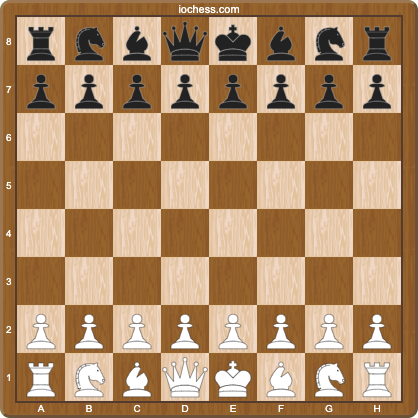
Start with coordinate identification, 5 minutes daily:
- Set up your board with White at the bottom, or open an online coordinate trainer.
- Pick a random square name, for example d5, and immediately point to or click it.
- Check your answer. If wrong, say the correct coordinate aloud three times while looking at the square.
- Complete 20 to 30 identifications per session, log accuracy by percentage.
- After 90 percent accuracy from White’s view, flip the board and repeat from Black’s view.
Automaticity comes from fast recall with feedback. Aim for 20 to 30 timed attempts per set, and record how long each run takes to complete.
Add square color recognition, 3 to 5 minutes daily:
- Call out a square name, for example f4, then state light or dark without looking.
- Verify on the board and mark correct or incorrect in your log.
- Repeat for 20 squares per set, twice if your accuracy falls below 85 percent.
- As a temporary aid, map files a–h to 1–8. If file number plus rank is even, the square is dark, odd means light.
- Phase out calculation. Aim for instant recognition, no counting.
After 2 to 3 weeks of daily practice, squares like f4 or b7 should be instant, and orientation errors will fade. Test yourself on square color drills weekly to verify progress. The free square colors lesson shows the patterns that make the answer instant instead of counted.
Step 2: Train Piece-Movement Pathways
Once coordinates feel automatic, visualize routes. Hardwire knight jumps, bishop diagonals, and rook files so tactical lines “appear” without counting moves.
Knight route visualization, 10 minutes daily:
- Place a knight on a starting square, for example f5.
- Choose a target, for example b4, and find the shortest route.
- Say each move aloud: “Nf5-d4-c6-b4 in three moves,” then verify on the board.
- When multiple shortest routes exist, list them all before moving.
- Drill 5 to 10 routes, mixing center, edge, and corner starts.
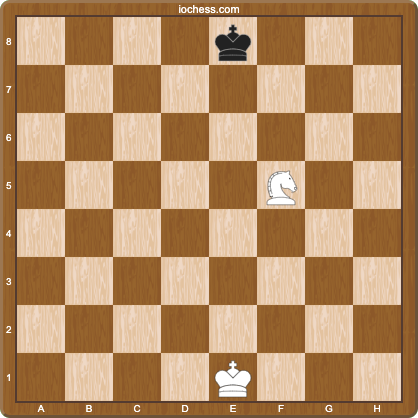
After you sustain 80 percent route accuracy on a board for one week, switch part of the session to mental-only work for 5 minutes, then verify on the board.
- Turn away from the board and imagine a knight on a random square, for example g1.
- Mentally calculate the shortest route to a target, for example e4.
- Hold the sequence in memory, then test it on the board.
- Track correct routes and any squares you consistently misjudge.
- Complete 5 to 10 mental routes per session.
Use structured knight movement exercises to scale difficulty. After 2 to 4 weeks, knight forks and jumps become immediate patterns, not calculations.
Bishop and rook pathways, 5 minutes daily:
- Place a bishop, for example on c1, and name all one-move targets aloud on both diagonals.
- Practice shortest diagonal routes, for example c1 to h6 in one move, then reverse.
- Repeat with rooks, sweeping full ranks and files while naming target squares quickly.
- Mix blocked and open lines to mirror practical positions.
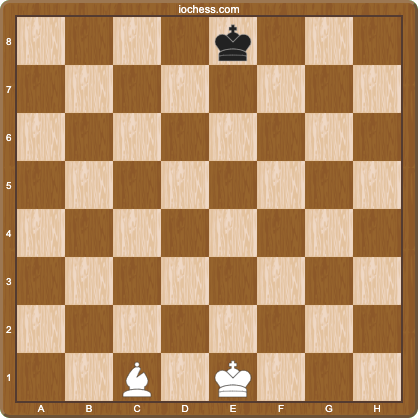
Drill bishop diagonals with diagonal recognition drills until both long and short diagonals feel as obvious as straight lines.
Step 3: Develop a Pre-Move Scanning Ritual
Board knowledge matters only if you apply it before every move. A strict scan prevents tunnel vision and stops “I didn’t see that” blunders.
Implement the full-board scan checklist:
Before each move, ask and answer these three questions:
- What does my opponent threaten in one move, checks, captures, mates, forks?
- What are the forcing moves for both sides, all checks, captures, and serious threats?
- Which pieces or squares are loose or overloaded, count attackers versus defenders?
This ritual stops the common failure of calculating only your idea while overlooking the opponent’s forcing reply.
Practice the scan in slow games:
- Play 15-minute or longer games so you can apply the checklist fully.
- Scan every piece for new lines after each move, both yours and your opponent’s.
- Count attackers and defenders on targets like e5, f7, and loose pieces.
- Only move after completing the scan and confirming no immediate tactical shot exists.
Do not assume “defended equals safe.” Verify that defenders are not pinned, overloaded, or lost to a zwischenzug before trusting a piece’s protection.
Post-game review for scan failures:
- Tag positions where you missed a threat or left a piece en prise.
- Label them “board vision misses” in your analysis notes.
- Rebuild those positions and rehearse the checklist you skipped.
- Track blunders per game and aim to reduce that number each week.
Within 3 to 4 weeks of consistent scanning, you should log fewer one-move blunders and spend less time double-checking simple captures.
Step 4: Integrate Tactics with Full-Board Awareness
Patterns make scans faster. Train tactics while applying the same three-question checklist so motifs pop out during real games.
Structured daily tactics with scanning:
- Do 10 to 20 puzzles daily using tactics puzzles or blindfold puzzle drills.
- Before solving, run the three-question scan on every position.
- After solving, name the theme aloud, for example fork, pin, deflection.
- If you miss one, set it up on a board, then re-visualize the solution with eyes closed.
Focus on pattern families:
Dedicate 1 to 2 weeks per theme, for example forks, pins, skewers, discovered attacks, then switch. After 1 to 3 months of theme blocks, the relevant motifs will “light up” during your scan.
Step 5: Train Audio-Based Visualization
Audio-only training forces a stable mental board. Tracking every move without sight clarifies piece placement and attack lines.
Create your audio game recordings:
- Select a short master game, 10 to 15 moves per side.
- Open your phone’s voice recorder or any audio app.
- Read moves in algebraic: “1 e4 e5. 2 Nf3 Nc6. 3 Bb5 a6,” include checks and captures.
- Leave 2 to 3 seconds of silence between moves.
- Save several games at different difficulties for variety.
Practice visualization from audio:
- Sit in a quiet place with no board in sight.
- Play the recording and update the mental position after each move.
- After every move, ask which squares are now attacked and which lines opened or closed.
- If you lose the thread, rewind to the last certain position and continue.
- Train for 10 minutes at the start of each session.
After 4 to 8 weeks, holding 3 to 5 plies in your head becomes easier, and calculating forcing lines feels less tiring. For structured practice, try complete visualization training.
Step 6: Practice Short-Sequence Visualization
Strong calculation starts with clean short lines. Train crystal-clear 3- to 5-move sequences without touching pieces.
The three-move visualization exercise:
- Start from the initial position or a familiar middlegame.
- Write or hear a three-move sequence: “1 e4 e5 2 Nf3 Nc6 3 Bb5 a6.”
- Close your eyes and visualize the final position, all pieces placed.
- Hold the picture for 5 to 10 seconds and name key squares, for example e5, f7, d4.
- Only then set it on the board and compare against your image.
- Note exactly where your image diverged and repeat that branch once correctly.
When three-move lines are accurate, extend to four, then five, and add one sideline per sequence. Increase sequence length by one ply each week once you sustain 85 percent accuracy.
Within 2 to 6 weeks, you will hold short lines automatically and compare candidate moves without losing track of pieces.
Step 7: Progress to Blindfold Mini-Games
Simple endgame blindfold practice:
- Start with king and pawn versus king, then basic rook endgames.
- Hear or memorize the start, remove the board, then play in algebraic.
- Announce every move, for example “Kf2, Kf7, Ke3,” and track captures and checks.
- After 5 to 10 moves, restore the board and compare to your mental position.
- Log the first mistake point and the feature you lost, for example a passed pawn or a file.
“Head games” for advanced practice:
- During commutes or lines, start a game in your head with an offbeat first move, for example 1 c3.
- Play both sides mentally for 10 to 15 moves, announcing moves in your head.
- Pause at critical positions and name every loose piece and check.
- Periodically verify on a board to confirm piece placement.
Begin with just the opening moves blindfolded, then extend to simple endings and short middlegame sequences. Over 2 to 6 months, you can play long stretches without sight, and your over-the-board piece awareness will sharpen.
For structured blindfold progression, follow the blindfold chess method, eight free lessons that go from square colors to tactical patterns.
Creating Your Daily Training Routine

Blend drills into one focused session. A 30 to 40 minute plan looks like this:
- 5 minutes: Square colors and coordinates, Step 1
- 10 minutes: Knight and bishop routes, Step 2
- 10 minutes: Audio visualization from recorded games, Step 5
- 5 minutes: Three-move sequence visualization, Step 6
- 5–10 minutes: Tactical puzzles with full-board scanning, Step 4
In all real games, rapid, blitz, or classical, run the Step 3 scan before every move. This is where drill work becomes practical strength.
If you want a guided path with tracking and difficulty control, try structured training programs tailored to your current level.
Common Mistakes and How to Avoid Them
Mistake 1: Treating drills as puzzle grinding instead of scanning practice
Many players solve hundreds of puzzles yet miss simple threats because they never practice a consistent pre-move scan. Loose-piece awareness, checks, and captures must be checked every move.
Solution: Use a fixed checklist on every position. Identify all checks, captures, and threats for both sides, and every undefended piece. Track blunders per game, accurate recalls, and the number of clean lines you can hold.
Mistake 2: Focusing on only one part of the board, tunnel vision
Players fixate on an attack near the king and miss a rook on the far file or a counterblow against a loose piece. Local focus hides long diagonals and back-rank issues.
Solution: Enforce full-board scans by rule. Rotate your board or mentally flip perspective to break fixation. Always ask, “What is my opponent threatening?” before you choose a move.
Mistake 3: Rushing and assuming “defended = safe”
Fast play in sharp positions hides overloaded defenders, pins, and simple captures. Pieces that look covered can still fall to a tactic or tempo move.
Solution: Slow down in tactical positions. Count attackers versus defenders, examine at least one exchange sequence, and train with moderate time controls to keep discipline under the clock.
Measuring Your Progress
Track these concrete metrics to verify improvement:
- Coordinate speed: Can you identify any square within one second? Time a 20-square run weekly.
- Blunder rate: Count one-move blunders per game. Seek a steady downward trend across 10 games.
- Tactical accuracy: Log solve time and success rate. Aim to spot basic themes within 10 to 15 seconds over time.
- Audio stamina: Moves you can follow accurately from audio alone. Increase weekly.
- Blindfold depth: How many opening moves can you play error-free, then short endgames? Track milestones at 5, 10, and 15 moves.
Keep a simple training log. Record drills, times, accuracy, and specific misses. Use the log to choose next week’s emphasis and to celebrate concrete gains.
Conclusion: Turn Board Vision Chess Drills Into Board Mastery
Key takeaways:
- Drill coordinates and colors 5 to 10 minutes daily until you reach 90 percent accuracy from both sides.
- Train knight, bishop, and rook pathways 10 to 15 minutes, then switch part to mental-only once routes are 80 percent accurate.
- Run a three-question pre-move scan every move, then play 15-minute games to build the habit and cut blunders.
- Do 10 to 20 puzzles daily with the same scan, plus short-sequence and audio drills to speed pattern recognition.
- Progress to blindfold mini-games, starting with simple endgames, and track growth in moves held without sight.
Micro-action: Set a 10-minute timer now. Do 20 coordinate IDs, 5 knight routes, then play one 15-minute game using the scan on every move.
For guided practice, use progressive exercises, add complete visualization methods, and try blindfold puzzles matched to your level.
Frequently Asked Questions
How long will it take to see improvements in my chess game?
You can expect to see noticeable improvements in your chess game within 2 to 4 weeks of consistent practice. By dedicating just 10 to 30 minutes daily to the drills outlined, players typically experience a reduction in one-move blunders and can spot tactics more quickly.
What tools do I need to start the training program for board vision?
To follow the training program, you will need a physical chess board and pieces, or you can use online resources like Chess.com's Vision trainer. Additionally, having a timer to track your drill sessions, a notebook for recording progress, and optionally a recording device for audio visualization can enhance your practice.
How can I measure my progress effectively while practicing?
You can measure your progress by tracking several key metrics: your accuracy in identifying square coordinates and colors, the number of one-move blunders per game, the time taken to solve tactical puzzles, and your ability to visualize moves without a board. Keeping a simple training log will help you monitor these aspects and adjust your focus as necessary.
What are common mistakes to avoid when practicing these drills?
Common mistakes include treating drills merely as puzzle grinding instead of incorporating a consistent pre-move scan, having tunnel vision by focusing on only one part of the board, and rushing moves under the assumption that defended pieces are safe. To avoid these pitfalls, use a checklist for every position and make it a habit to scan the entire board.
How frequently should I practice to see the best results?
You should aim to practice daily for 10 to 30 minutes to develop good habits and achieve the best results. Frequent short sessions are more effective than infrequent longer ones; focus on the quality of practice rather than sheer volume to enhance recognition and tactical execution.
Can I integrate your methods into my existing chess routine?
Yes, you can easily integrate these methods into your existing chess routine by setting aside time for the specific drills before or after your regular games. By applying the full-board scanning ritual before every move during your games, you reinforce the training you've done and turn board awareness into a natural habit.
Is there any specific sequence I should follow in my drills?
Yes, a recommended sequence is to first practice square colors and coordinates, followed by knight and bishop routes, and then audio visualization exercises. Continue with three-move visualizations and finish with tactical puzzles, ensuring that you apply the full-board scan method consistently before making your moves.
Are there specific resources I can use to aid my training?
Absolutely, you can utilize online resources like Chess.com's Vision trainer and ChessKid's coordinate trainer to enhance your learning. Additionally, platforms such as DarkSquares offer structured drills and blindfold chess puzzles, which can help tackle specific areas such as visualization and tactical recognition effectively.
Last updated
Related Articles
Is Chess Good for Your Brain? What the Science Actually Says
Short answer: yes, chess is a genuine mental workout, but the popular version of the claim is overhyped. Playing chess reliably trains a cluster of do…
Antoine · 7 min read

Is Being Good at Chess a Sign of Intelligence?
Short answer: only partly. Being good at chess correlates modestly with general cognitive ability, but the link is far weaker than most people assume.…
Antoine · 6 min read

How to Train Chess Visualization: Pick the Right Trainer and Plan
Most club players lose the position after 2–3 moves when calculating, then blunder under pressure. You can change that in 4–8 weeks with a focused rou…
Antoine · 10 min read