
Grandmaster Timur Gareyev played 48 simultaneous blindfold games at UNLV in December 2016, a Guinness-certified world record. Neuroscience shows feats like this depend on abstract maps of piece relations, not photographic images. EEG studies report higher alpha and theta during blindfold play, and neuroimaging links chess expertise to fusiform and temporal regions. The Neuroscience of Blindfold Chess: How the Expert Brain Sees the Board clarifies these adaptations and the expanded working-memory advantage seen in chess masters, offering concrete cues for training visualization without sight. For a guided drill plan that operationalizes this research, start with our blindfold chess pillar.
What Is the Neuroscience of Blindfold Chess?
Expert blindfold players describe their position knowledge as abstract relations and attack lines, not pictures, according to research published in PMC. Classic observations from De Groot and the landmark Chase and Simon 1973 "Perception in Chess" study echo this, showing that strong players perceive positions as meaningful chunks of 4 to 5 pieces rather than isolated pieces, and crucially, the master advantage disappears on random, non-game-like positions. This proves chunking, not raw memory capacity.
Electroencephalographic work suggests distinct brain states during blindfold play. A 2022 single-subject case study of a grandmaster (Fuentes-García et al., Physiology & Behavior, n=1, ELO 2562) reported increments in theta and alpha power when sight was removed, with the highest alpha power occurring during blindfold games, consistent with elevated internal attention and working memory load (EEG case study). Larger-sample replication is still needed before the pattern can be generalized. For practical training drills that work with this brain-state profile, see our structured blindfold training regimen.
The Expert Brain's Processing Advantage
A 2024 Frontiers in Psychology connectome study (Gonzalez-Burgos et al.) using graph-theoretic analysis on 19 chess players and 19 controls found higher local efficiency and stronger intra-module connectivity in players, consistent with specialized network tuning. Older neuroimaging work, meanwhile, shows chess experts activate the fusiform face area (FFA) when viewing game positions, a region normally associated with face recognition. This suggests experts process a chess position as a single integrated object, much like recognizing a familiar face.
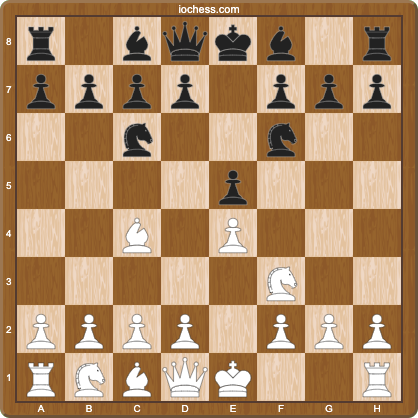
This face-like mode saves time and reduces cognitive load. Instead of storing 32 items, experts recall a configuration, for example a fianchettoed bishop, a locked center, and an open file, then update that chunk efficiently after each move. Our guide to chess memory techniques breaks down how to build these chunks deliberately.
Why Does Understanding Blindfold Chess Neuroscience Matter?
These findings give players a training map. Blindfold practice strengthens calculation and position holding that transfer to sighted play, while avoiding the dead end of forcing perfect images. For drills and structure, see our article on the mental benefits of blindfold chess, which emphasizes pattern recall, coordinate fluency, and short visualization sprints under time pressure.
Implications for Cognitive Training
Skill gains depend on structured context. The grid anchors spatial coding, and expert advantages extend to novel, non-chess stimuli when spatial changes must be detected, with the effect largest at supra-capacity set sizes, per Memory & Cognition. This suggests that domain knowledge plus a consistent spatial scaffold, such as an 8x8 matrix, amplifies working-memory performance.
Beginners can build this scaffold deliberately. Start with coordinates and legal move generators, then graduate to blindfold mate-in-one drills and short tactic lines, the exact progression laid out in our complete guide to mental chess training. Our 7-step blindfold beginner journey lays out exactly how to shift from imagery to relations.
Measuring Expertise Development
Blindfold chess offers clean metrics for tracking growth. Researchers and coaches can measure number of boards held in simul, average move accuracy, error types under time constraints, and brain state markers such as alpha increases during calculation. For a historical view of peak performance, see our blindfold chess world records timeline.
How Does the Expert Brain Process Blindfold Chess?

Holistic Pattern Recognition
Experts scan positions with wide perceptual spans and see structure instantly. Players rated 1900 to 2700 process larger chunks and avoid tunnel vision common to weaker players, according to Chess.com research. In experiments, experts also outperformed novices on memory for domain-general stimuli, especially when detecting spatial changes at set sizes beyond normal capacity, per Memory & Cognition. Classic imaging work has also linked chess pattern recognition to the premotor cortex, pointing to action-based encoding of candidate moves.
Working Memory Capacity Enhancement
Typical visual working memory holds around four items, yet expert players appear to handle more position-level chunks in fast recognition tasks. Chase and Simon (1973) showed that masters recall more pieces and larger chunks than novices when shown real positions, but lose this edge entirely on random positions, proving the advantage comes from pattern libraries, not photographic memory. Decades of study build thousands of these patterns, which experts retrieve in milliseconds. This is the deep mechanism our grandmaster visualization techniques aim to train.
Neural Efficiency and Calm Activation
During blindfold play, experts maintain stable brain activity while sustaining focus. Reports from grandmaster blindfold exhibitions describe steady brainwaves with spikes only during external disturbances, consistent with controlled attention. Combined with the elevated alpha power seen in the 2022 single-subject EEG case study during blindfold chess, the profile suggests calm, efficient processing that prioritizes internal computation over visual input. Our piece on chess psychology explores how this calm state breaks down under pressure.
Real-World Examples of Blindfold Chess Mastery
Timur Gareyev's Simultaneous Exhibitions
Timur Gareyev set the current Guinness-certified world record for simultaneous blindfold chess at UNLV in Las Vegas on December 3 and 4, 2016. He played 48 boards over 19 hours 9 minutes (which included a half-hour fire alarm break), scoring 35 wins, 7 draws, and 6 losses, while pedaling an exercise bike to burn off nervous energy. Brain scans suggested unusually strong connectivity between his visual network and frontoparietal control regions, indicating atypical routing of imagery and attention, per The Guardian. On standard memory tests for numbers, pictures, and words, he was near average, underscoring domain specificity.
George Koltanowski's Mental Gramophone
George Koltanowski played 56 blindfold games consecutively (not simultaneously) at the Fairmont Hotel in San Francisco on December 4, 1960, at about 10 seconds per move. He scored 50 wins, 6 draws, and zero losses (sources differ on the total duration, with figures ranging from roughly 10 to over 13 hours). He described a "mental gramophone," a conceptual playback of positions and candidate moves, aligning with modern findings that experts rely on abstract relations rather than pictorial images.
Multiple Board Management
Top blindfold players juggle dozens of games by rotating through boards in a fixed order, updating positions as moves are announced, then resuming a circuit. They rely on algebraic coordinates, opening templates, and strategic themes, for example minority-attack setups or opposite-colored bishop endings, to compress each game into a few live plans. For structured drills, see our 9 essential blindfold exercises for every level, which builds these skills in small increments.
Common Misconceptions About Blindfold Chess

Misconception: Experts Have Photographic Memory
Experts report knowing relations and threats, not seeing a picture of the board, a point documented in PMC. They track control of files, diagonals, and key squares, and weigh tactics such as forks or pins that could appear after two or three ply, instead of maintaining a static image. Chase and Simon (1973) clinched this with their random-position finding, no master edge when the position is not meaningful.
Misconception: The Skill Requires Innate Talent
Neural changes that support blindfold play, for example stronger links in visual processing regions and expanded chunking capacity, reflect thousands of hours with positions, not a rare trait. Gareyev's average scores on generic memory tests, reported by The Guardian, and the training-driven gains reported across the literature both point to practice over talent. See also what science actually says about blindfold chess safety.
Misconception: Blindfold Ability Transfers Broadly
Some skills generalize, such as sustained attention and spatial updating, but the strongest advantages stay within chess-like structures. Experts outperform novices on novel stimuli when spatial change detection is required and set sizes are large, especially within a consistent spatial framework, per Memory & Cognition. There is no evidence that blindfold strength alone boosts unrelated study tasks.
Conclusion
- Experts represent positions conceptually, focusing on control and relations, not photographic images (PMC).
- Neuroimaging ties chess expertise to the fusiform and premotor regions, and Chase and Simon (1973) proved the master advantage is chunk-based, not raw memory.
- A 2022 single-subject EEG case study reports higher alpha and theta during blindfold play, consistent with focused internal attention; larger samples are still needed (EEG case study).
- Performance scales with structured context, for example the 8x8 grid, and improves with stepwise practice (Memory & Cognition).
Micro action: Spend 10 minutes today on blindfold coordinate recall and mate-in-one puzzles. Then add a two-move tactic line without sight, logging errors by square or piece.
For a guided plan, start with our core pillar on blindfold chess or the complete chess visualization training guide, then apply the drills in our structured blindfold training regimen and test yourself with coordinate drills.
Frequently Asked Questions
Last updated: Jul 23, 2026


Comments