
Blindfold Chess in 30 Days: A Day-by-Day Beginner Plan
Antoine8 min read
Table of contents
Most beginners can play a short blindfold game in 30 days with 15 to 20 minutes a day. This plan shows how to play blindfold chess as a beginner across your first 30 days, building from square recall to full games. You will memorize the starting position, identify any square in under one second, and track single pieces across 5 moves. By week three, you will reconstruct 6 to 10 piece positions in 20 to 30 seconds and solve 4 to 8 piece puzzles. In week four, you will play full blindfold games against a partner or AI and analyze errors. The progression sits inside our broader blindfold chess curriculum.
What You'll Need to Get Started
Gather these tools to keep training objective and consistent.
- Chessboard and pieces for early drills and verification, physical or digital
- Training apps and websites: the DarkSquares training platform for coordinate, square color, and blindfold puzzle drills, plus a notebook tracker
- Notebook or digital tracker to log accuracy, common errors, and the exact sequences that caused position loss
- Practice partner or AI opponent for verbal moves, plus an optional timer for 3 to 10 minute drills
After Week 1, drop the board for core drills and speak moves only, for example e4 or Nf3. Building spatial visualization (instead of rote notation memory) is what separates lasting blindfold skill from quick collapse around move 10.
Step 1: Master Board Familiarity (Days 1-7)
Build instant square recall, the base of all blindfold play. This maps to Levels 1 and 2, squares and coordinates, in the DarkSquares 7-level system. Aim to name any square's color and location in under one second.
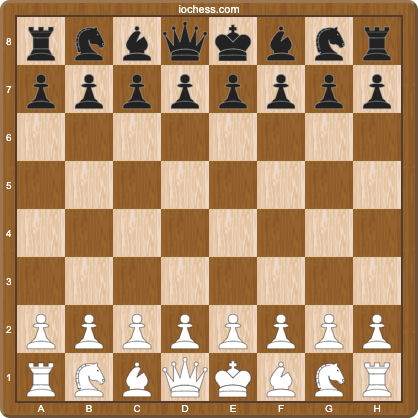
Daily practice routine (10 to 15 minutes):
- Recite the full starting position from memory, with pawns on ranks 2 and 7, rooks on corners, knights, bishops, queen, and king
- Do 50 random square calls, answering with color and coordinates instantly, for example "f5 is light, file f, rank 5"
- Divide the board into four 16-square quadrants, then mentally trace the edges and main diagonals inside each quadrant
Remember that a1 is dark and same-color corners align diagonally. Drill these patterns with the DarkSquares square colors exercise to speed recognition.
Success metric: Hit 95% accuracy on 20 random squares, measured with the coordinates trainer. Record any hesitations longer than one second.
Step 2: Track Single Piece Movements (Days 8-14)
Learn to track one piece cleanly through several moves. Start with knights to strengthen visualization of non-linear motion.
Daily practice routine (15 minutes):
- Warm up by reviewing Week 1 drills, then recite the starting position and five random square colors
- Run 20 mental tours, for example knight e4, f6, d5, e3, then verify the final square on a board or app
- Trace bishop paths that stay on color, for example g1, c5, f8, and confirm every stop matches the starting color
- Study a four-piece position for 30 seconds, reconstruct it verbally without looking, then check against the board
Use the DarkSquares training library to build fluency with knight and bishop movement. Log every blunder to spot recurring squares or paths causing errors.
Success metric: Cleanly track five-move sequences with zero mistakes. Note any "lost position" moments and the exact move that caused them.
Step 3: Build Position Memory and Solve Puzzles (Days 15-21)
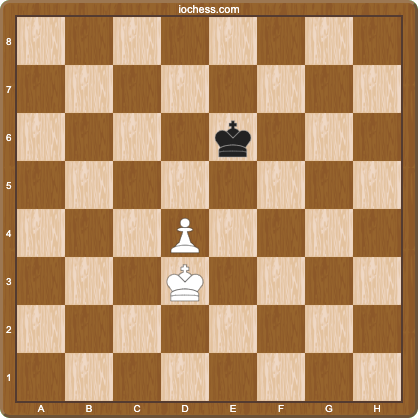
Shift from single pieces to full positions and calculation. You will snapshot board states quickly, then solve 4 to 8 piece tactics verbally.
Daily practice routine (15 to 20 minutes):
- Warm up with quick square colors and a short knight tour from earlier weeks
- Study the starting position or a custom six-piece setup for 30 seconds, reconstruct verbally, then reduce study time to 20 seconds
- Play one-ply pairs mentally, for example e4, e5, verifying the new board state each time, then add one ply weekly
- Solve five blindfold puzzles daily with 4 to 8 pieces, setting positions verbally, calculating the line, then stating the winning move
Blindfold puzzle work builds pattern recognition and visualization together. Run the dedicated DarkSquares visualization trainer sessions to pace difficulty.
Success metric: Reconstruct 10-piece positions accurately and solve at least four of five puzzles. Keep 20-second study times without losing accuracy.
Step 4: Play Your First Blindfold Games (Days 22-30)
Integrate skills into live games. Aim to play more blindfold than sighted this week to build habit.
Daily practice routine (20 minutes):
- Warm up with five square calls and a short knight or bishop path
- Play limited-visibility games, first hiding pawns and rooks, then all but kings and queens, before going fully blindfolded
- Play one full blindfold game with verbal moves against AI or a partner, starting at 5 minutes, pause to reconstruct if you drift
- Replay a previous blindfold game mentally, identify the exact move where tracking failed, and note any missed capture or recapture
- Review a known opening or endgame verbally, for example the Italian Game line 1.e4 e5 2.Nf3 Nc6 3.Bc4, or queen versus rook
You can play blindfold chess online on DarkSquares at varied levels, or build the fundamentals first at the training hub. Players following structured plans typically report gains in calculation depth and board vision after sustained daily practice.
Success metric: Finish one to two blindfold games daily with under three tracking errors. Prioritize blindfold play over sighted games this entire week.
Common Mistakes to Avoid
Three pitfalls stall most beginners in the first 30 days. They overload working memory and cause creeping position drift, but each has a simple fix.
Attempting Full Games Too Early
Early full games often collapse around move 10 to 12 when memory floods. Start with small positions and single move pairs, verify each state mentally, and only increase depth after stable accuracy.
Neglecting Board Verification
Skipping checks cements wrong positions, like missed captures or off-by-one files. Rebuild the full starting position before moves, insert frequent verifications, and track a "checks per session" rate in your notebook.
Treating It as Memory Instead of Visualization
Notation-only recall caps near move 10. Prioritize spatial work, coordinates, knight tours, and color anchors. The DarkSquares visualization training path shows how to build a true internal board rather than a move list.
Tips for Consistent Progress
Short, daily sessions beat marathons. Practice 15 to 20 minutes every day, stop as soon as focus fades, and avoid reinforcing wrong visuals under fatigue.
If you lose the position, roll back to the last accurate state instead of guessing. Track daily metrics, including puzzle scores, square accuracy, ply depth, and errors per game.
Timelines vary, but solid comfort often takes 2 to 3 months. The 30-day base improves board vision in over-the-board games and gives a clear path to keep building.
Real-World Success Stories
Beginners who complete 30-day programs usually share a few traits: daily practice, controlled difficulty increases, verification after every sequence, and simple metric tracking. The simultaneous blindfold record progression shows what decades of structured training can produce at the extreme end: George Koltanowski played 34 boards blindfolded simultaneously in Edinburgh in 1937 (scored +24 =10); Miguel Najdorf raised the bar to 45 boards in São Paulo on January 21, 1947 (+39 =4 -2, still the Guinness highest-win-percentage record); Marc Lang reached 46 boards in Sontheim in 2011; and Timur Gareyev set the current total-boards record with 48 at UNLV on December 3-4, 2016 (+35 =7 -6).
You do not need record pace. A daily 15-minute habit, one blindfold game, and at least five blindfold puzzles is enough to see clear 30-day progress. Public challenges and forum threads consistently show that players who commit to daily blindfold play over sighted play progress faster than those who alternate.
What to Expect After 30 Days
With 15 to 20 focused minutes each day, expect concrete skills and fewer tracking slips by the end of week four.
- Instantly recall the full starting position and piece placements without a board or on-screen aid
- Solve five daily blindfold puzzles with 4 to 6 pieces at high accuracy, speaking lines clearly
- Track one to three move sequences reliably, including captures and recaptures, without visual reference
- Play short blindfold games against weaker opponents or AI with under three tracking errors
- Add several moves of calculation depth in sighted games, especially in forcing tactical lines
Occasional slips still happen but decline fast with verification and structured drills. Full mastery takes months of steady practice, but this 30-day base sets the visualization infrastructure you will keep strengthening.
Conclusion
Key takeaways
- Build in stages, squares, single-piece tracking, position memory with puzzles, then full games
- Verify constantly, tracking accuracy, ply depth, and errors to prevent cementing mistakes
- Favor short daily sessions over long sporadic ones to protect visualization quality
- Use targeted DarkSquares drills and 4 to 8 piece blindfold puzzles to build the right foundations
- Expect faster calculation in sighted chess after 2 to 3 months of consistent practice
Micro-action: schedule a 20-minute session today. Complete 50 square calls, one 5-move knight tour, and one 6-piece reconstruction.
Ready to start? Open the DarkSquares progressive training exercises, log your metrics, and play your first limited-visibility game this week.
Related reading
Frequently Asked Questions
What rating do I need to start blindfold chess training?
There is no minimum. Players from 800 to 2200 Elo all benefit, but the entry drills differ. Below 1200, focus on square colors and coordinates for the first two weeks. From 1200 to 1800, jump to 4-to-8 piece reconstructions and short knight tours. Above 1800, start with full blindfold puzzles at depth 3 to 5. The DarkSquares <a href="https://darksquares.net/learn/blindfold-chess" rel="noopener noreferrer" target="_blank">blindfold chess</a> path adapts difficulty automatically.
Can I learn blindfold chess without a coach or partner?
Yes. Coaches help, but the bottleneck is structured drills and verification, not human feedback. A solo training app with voice input, automatic verification, and adaptive difficulty replaces the partner. The non-negotiables: log every error, verify positions before deepening calculation, and keep sessions to 15 to 20 minutes. Public records by Koltanowski and Gareyev were built on solo daily practice, not constant coaching.
How many moves can a beginner visualize after 30 days?
With consistent daily practice, most beginners reach 3 to 5 ply (one and a half to two and a half full moves) by day 30, on simple structures with under eight pieces. Complex middlegames stay shaky until 60 to 90 days. The cap is rarely talent; it is verification discipline. Players who insert a verification breath every two ply double their depth within 6 weeks.
What is the best blindfold chess app for beginners?
Look for three features: graded exercises that start with square colors before moving to coordinates and full positions, immediate visual feedback when you miss, and progress tracking by accuracy and speed. The DarkSquares <a href="https://darksquares.net/learn/blindfold-chess" rel="noopener noreferrer" target="_blank">blindfold chess</a> 7-level system runs exactly this ramp. Skip apps that throw you straight into full blindfold games before you can name any square instantly.
What should I do if I lose track of the position mid-blindfold game?
Stop calculating. Roll back to the last sequence you can rebuild with full confidence and verify each piece location aloud. Do not guess; guessing cements wrong visuals. If you cannot rebuild, restart from the position before your last 3 moves using your notation log. After the game, mark the exact move where tracking failed in your notebook so you can drill that pattern next session.
Last updated
Related Articles
Magnus Carlsen and Blindfold Chess: How the Champion Trains Without the Board
Magnus Carlsen and blindfold chess go beyond a stunt. In New York in 2015 he tracked three boards with clocks, and in Vienna he faced five opponents w…
Antoine · 8 min read

How to Choose a Blindfold Chess Trainer: Features That Actually Matter
Disclosure: Dark Squares is our product. We have aimed for a fair comparison, but readers should weigh our perspective accordingly. Blindfold training…
Antoine · 7 min read

10 Classic Drills Masters Use to Train Blindfold Visualization
Blindfold chess is not magic. Miguel Najdorf played a 45-board blindfold simul in São Paulo in 1947, and George Koltanowski set a 56-game consecutive…
Antoine · 7 min read