
How to Calculate in Chess: A 5-Step System for Finding the Right Move
Antoine10 min read

Table of contents
Most blunders start with missed forcing moves. Use a repeatable checklist that searches checks, captures, and threats 2-3 moves deep. How to Calculate in Chess: A 5-Step System for Finding the Right Move shows you how to begin with a safety scan, then test a short list of forcing candidates so you stop hanging pieces and convert tactics. You will usually analyze 2-4 candidate moves, saving time while raising accuracy. With daily puzzle work and short visualization drills, players often see fewer blunders and cleaner tactics within weeks.
Prerequisites
Set up short, focused training that mirrors real games. Practice without an engine, use a timer, and track positions using notation so you can review lines later.
Required Tools:
- A chessboard or app like Lichess or Chess.com, no engine assistance during training.
- Puzzle books or online trainers, list checks, captures, threats for 20-60 seconds first.
- A timer to cap each position at 1-2 minutes, building speed under mild pressure.
Foundational Knowledge:
- Core tactical motifs: pins, forks, skewers, discovered attacks, and double checks.
- Recognizing forcing moves: checks, captures, and direct threats that compel replies.
- Basic notation to record lines and compare them with solutions.
If you need stronger board imagery, start with how to enhance visualization skills in chess to boost mental board clarity before deep calculation.
Step 1: Find Opponent's Threats (Safety Scan)
Begin by asking what your opponent can do on the next move. List immediate checks against your king, direct captures on your loose pieces, and any mating threats or forks that create tempo.
How to execute this step:
- Scan for all possible checks against your king, including sacrifices.
- List undefended and overworked pieces, then compare attackers and defenders.
- Spot mating nets, back-rank issues, and loose squares around your king.
- Test your intended move against the opponent's most forcing reply.
For example, if your last move weakened g2 or g7, verify there is no immediate Qh4+, Qg5+, or Bc5+ that wins material or mates. If a mate threat exists, fix it first, then resume your attack.
Expected outcome: A clean board state with no hanging pieces, plus a list of direct checks and mate threats you must respect.
Start each turn by checking the consequences of your opponent's last move. You already assessed king safety and loose pieces a move ago, so reuse that work and avoid recalculating the entire position.
Step 2: Identify Tactical Targets and Motifs (Candidate Moves)
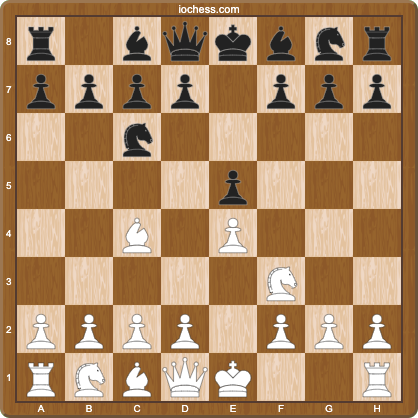
Once safe, generate 2-4 serious candidate moves. Favor forcing options, especially checks and captures that land on the opponent's side, and include the opponent's best resources in every line.
How to identify strong candidates:
- Search for every check first, including sacrifices that open lines.
- List captures that win material, destroy pawn shields, or free files.
- Add attacking moves that create threats: pins, forks, and discoveries.
- Keep only 2-3 top candidates to avoid shallow, mixed analysis.
In a pinned position, consider Nxc6 winning a defender, Qh5 adding mate pressure, or Bc5+ forcing king moves. Limit yourself to the most forcing moves so you can calculate them accurately.
Calculating five or more candidates invites confusion. Strong players calculate fewer moves, but they check them deeper and include the opponent's best replies. This candidate-first habit is the core of Kotov's classic "tree of analysis" method from Think Like a Grandmaster, and it remains the default framework for modern trainers.
Expected outcome: A short list of forcing options, each paired with the opponent's strongest defense to prevent tunnel vision.
Step 3: Calculate All Checks

Checks limit replies to king moves, blocks, or captures. Follow the most critical checking lines 2-3 moves or until you land in a quiet position with no immediate tactics.
Calculation technique:
- For each checking move, visualize the position after the check lands.
- Enumerate every legal reply, then choose the toughest defense.
- Follow that branch until the position stabilizes or the tactic fails.
- Track kings, queens, and rooks closely, they change evaluation fastest.
For instance, a knight check on Nc7+ often forces ...Kd8 or ...Ke7. Also test alternatives like Qa4+ or Qh5+ that might deflect defenders or open files.
If a line fails by move three, drop it and test the next checking idea. This method of elimination saves time and prevents circular analysis.
Expected outcome: You either find a winning check sequence, or you confidently rule out inferior checking ideas.
Sharper visualization makes this step easier. Try a structured blindfold chess training regimen to see forcing lines clearly without moving pieces.
Step 4: Calculate All Captures
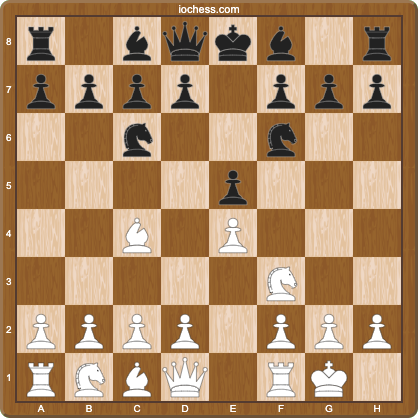
Captures change material and piece activity. Calculate the full exchange, including all recaptures, then compare the final position for material count and coordination.
Exchange evaluation process:
- Identify every capture your pieces can make, even surprising ones.
- Calculate expected recaptures and in-between moves that alter order.
- Count the final material using point values, then check piece quality.
- Assess if lines open, defenders disappear, or king covers weaken.
Example: If Rxg2 is possible, analyze ...Rxg2 Kxg2 Qg5+ ideas, see if pins break, and check if your rook gets trapped. Counting alone is not enough if your pieces end up stuck.
Expected outcome: A clear verdict on material, activity, and king safety, not just a raw point tally.
Step 5: Calculate All Tempo-Moves (Threats and Attacks)
Now check non-checking moves that force replies. Threaten loose pieces, overworked defenders, or key squares, then look one move deeper for decisive improvements.
Tempo-move analysis:
- Target undefended pieces and pieces guarding mates or queening squares.
- Search for discoveries, revealed attacks, and double threats.
- Create pins that restrict movement or overload defenders.
- Look one move deeper to find a sharper tactic or safer version.
- Evaluate the result overall: king safety, material, activity, structure.
For example, hit an enemy rook to win a tempo, then jump a knight to an outpost that threatens a fork. These tempo-gaining ideas often enable the final tactic you already scoped.
Expected outcome: A best move that either wins material, improves attacking chances, or fixes a concrete weakness.
Finish by discarding bad lines early, stress-testing your top candidate against the opponent's best defense, and comparing the final position to the current one. If two moves are equal, choose one and keep time on the clock.
When to Apply This System vs. When to Trust Intuition
Use full calculation in unstable positions with forcing moves. In quiet positions, choose improving moves by principle, then save time and energy for the next tactical moment.
Tactical positions requiring deep calculation:
- Exposed kings or weakened pawn shields near the king.
- Multiple loose pieces or overloaded defenders.
- Sharp exchange sequences with several captures.
- Positions rich in checks, captures, and direct threats.
Quiet positions where intuition suffices:
- Stable pawn chains with no direct tactics.
- Piece maneuvering to better squares without contact.
- Opening lines you know from your repertoire.
- Simple endgames with clear plan and minimal tactics.
Calculate forcing moves deeply, but keep quiet moves simple: improve worst piece, strengthen king safety, or fix structure. In these quiet positions your plan should follow what the chess pawn structures on the board are asking for, since the static layout, not a forcing line, decides the right square for each piece. Strong players vary depth by position type, blending concrete lines with clear plans. For a cleaner approach to the "think clearly under pressure" part of this balance, see simplify chess calculations: think clearly under pressure.
Common Mistakes to Avoid
Even experienced players repeat the same calculation errors. Use these fixes to tighten your process quickly in real games and puzzle sessions.
Vague Thinking Without Concrete Lines
"Considering" moves without specific variations leads to shallow analysis and blunders. Players drift between ideas, then play an uncalculated move that overlooks a resource.
Solution: Limit yourself to 2-3 candidates, then build one concrete line per move. Start calculating on your opponent's time and review your games, noting depth reached in critical positions.
Calculating Too Many Candidates
Tracking 5-6 branches causes line mixing and missed defenses. The brain struggles to keep multiple trees clear under time pressure.
Solution: Use the "checks, captures, threats" filter to keep only the top 2-3 moves. Calculate those deeply with the opponent's strongest replies.
Under-Calculating Forcing Positions
Stopping early in sharp positions invites tactics against your king. Lines that "look safe" often hide checks, zwischenzugs, or mating nets.
Solution: In forcing positions, compute until quiet or forced. Always test against the opponent's best defense and compare the final position for new weaknesses.
For structured drills that reinforce this process, try daily exercises at the Dark Squares training hub and track how your chosen lines compare with solutions.
Practice Methods for Rapid Improvement
Short daily sessions build fast, reliable calculation. Cap each puzzle, list forcing moves first, then calculate one main branch per candidate to a quiet position.
Effective training techniques:
- Spend 20-60 seconds listing checks, captures, threats before any calculation.
- Favor forward, forcing moves over passive retreats when testing ideas.
- Use videos and trainers, repeat motifs until they appear instantly.
- Set up game positions and calculate without moving pieces.
- Post-solve, compare your tree to the solution and note gaps.
Visualization improves with practice. Use trainers that ask you to track a sequence of moves, then recall final piece placement and threats. For a complete visualization program that strengthens imagery for longer lines, see the complete guide to chess visualization training, and review 5 visualization techniques from top chess players for methods used at the top level.
Real-World Examples: The 5-Step System in Action
Applying the steps to concrete positions makes the checklist stick. Each example shows the safety scan, a short candidate list, then forcing calculation.
Example 1: Complex Middlegame With Multiple Pieces
White begins with a safety scan, noticing Black's ...Qh4+ ideas and a loose bishop on b7. Candidates: 1.Bxh7+, 1.Nxc6, and 1.Qh5. Checks first, no direct win appears, so White tests Nxc6, which hits an overworked defender and enables a fork on e7 after ...Bxc6. The follow-up tempo-move Qh5 adds mate pressure while defending key squares.
Outcome: White executes Nxc6 followed by a fork, winning material without allowing counterplay.
Example 2: Centralized Knight Breakthrough
Material is level, White's kingside pawns look vulnerable, and Black's knights are centralized. Candidate moves for Black: ...Ne4, ...Qc7, and ...Qe7. Testing checks and threats shows ...Ne4 forces Qa5 or passive defense, improving Black's activity and attacking targets on g3 and c3.
This evaluation-first, then-candidates sequence points to ...Ne4, which gains the initiative and simplifies later tactics in Black's favor.
Example 3: Tactical Position With Hanging Pieces
White sees a hanging rook on e1 and a queen on a6. Candidate moves: 1.Qa5, 1.Rxg4, and 1.Re8. Calculating checks and captures shows 1.Rxg4 fails to ...Qxa6, while 1.Qa5 defends a6 and e1 simultaneously. After Black's best reply, 2...Qxa5 3.Re8+ wins material by force.
Outcome: White chooses Qa5, requiring four-ply accuracy and restraint, and converts material.
Conclusion
Use a repeatable method: safety scan, candidates, checks, captures, and tempo-moves. Limit branches, calculate deeply where moves force replies, and compare final positions, not just points.
- Start every move with a safety scan for checks, loose pieces, and mate nets.
- Keep 2-4 candidates, prioritize checks and winning captures first.
- Calculate one main line per candidate 2-3 moves, until quiet.
- Evaluate results by king safety, material, activity, and structure.
- Train daily: list forcing moves first, then verify with solutions.
Micro-action: On your next five puzzles or game positions, spend 30 seconds listing checks, captures, and threats before calculating one main line. Write the final position you expect, then compare it with the truth.
Want more visualization reps that speed up this system? Try short blindfold sessions with 9 essential blindfold chess exercises for every level, then recheck your lines on a board at darksquares.net/train.
Frequently Asked Questions
What is the difference between calculation and evaluation in chess?
Calculation is working out concrete move sequences: if I play this, they play that. Evaluation is judging the resulting position by material, king safety, activity, and pawn structure. You calculate to reach a position, then evaluate it to decide whether the line is actually good.
How many moves ahead do grandmasters really calculate?
Far fewer than people assume. In quiet positions even strong players calculate only one or two moves and rely on judgment. Depth grows only in forcing lines, where they follow checks and captures until the position is quiet. They calculate fewer candidate moves than amateurs, but check them more deeply.
Does visualization training actually improve calculation?
Yes. Most calculation errors come from a fuzzy mental board, not from poor logic. Training board vision through square colors, coordinates, and piece paths lets you see forcing lines clearly without moving pieces, so you drop fewer pieces and miss fewer in-between moves.
How should calculation change in blitz versus classical chess?
In blitz, lean on pattern recognition for quiet positions and reserve real calculation for the few critical, forcing moments. The same five-step filter still applies, just compressed: a fast safety scan, two candidates, and a short check of the most forcing reply.
Last updated
Related Articles
Is Chess Good for Your Brain? What the Science Actually Says
Short answer: yes, chess is a genuine mental workout, but the popular version of the claim is overhyped. Playing chess reliably trains a cluster of do…
Antoine · 7 min read

Is Being Good at Chess a Sign of Intelligence?
Short answer: only partly. Being good at chess correlates modestly with general cognitive ability, but the link is far weaker than most people assume.…
Antoine · 6 min read

How to Train Chess Visualization: Pick the Right Trainer and Plan
Most club players lose the position after 2–3 moves when calculating, then blunder under pressure. You can change that in 4–8 weeks with a focused rou…
Antoine · 10 min read