
Magnus Carlsen and Blindfold Chess: How the Champion Trains Without the Board
Antoine8 min read
Table of contents
Magnus Carlsen and blindfold chess go beyond a stunt. In New York in 2015 he tracked three boards with clocks, and in Vienna he faced five opponents with 12 minutes for all games. In January 2026 at ICE Barcelona, he played a blindfold game against Hikaru Nakamura, the first public blindfold head-to-head between the world’s top two. Blindfold training targets the real bottleneck in calculation, losing track of pieces several moves deep. Here is how Carlsen builds that internal board, and how you can train the same skill.
What Is Blindfold Chess Training?
Moves are announced in algebraic notation and an assistant moves the pieces, so the player must maintain the full position mentally. In Carlsen’s three-board simul at the 2015 Sohn Conference, each player had 9 minutes total, which gave him roughly 3 minutes per board. The exercise demands accurate square tracking, clean move ordering, and the ability to recall past exchanges without visual checks.
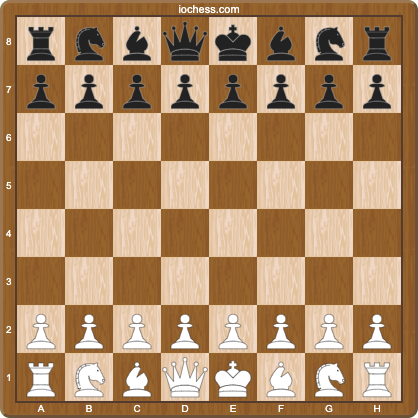
Grandmasters have long described the method behind this. Strong players focus on key regions of the board rather than all 64 squares at once, concentrating attention where the action is. Alexander Alekhine wrote that strong blindfold play relies on logical memory, organizing patterns, lines, and weak squares, not photographic recall of every piece.
Why Does Blindfold Training Matter?
Most calculation errors arise after three to five imagined moves when players forget a defended square or a captured piece. Blindfold work forces clean visualization, precise spatial reasoning, and steadier attention over long sequences. At ICE Barcelona in January 2026, Carlsen and Nakamura played a sharp blindfold game that, in Carlsen’s words, suddenly exploded with tactics, a reminder that the skill transfers to elite decision-making under time pressure.
It also gives quick feedback. If you cannot track a bishop from c1 to h6 through captures, or remember that a pawn moved from d5 to d4 two moves ago, the mistake appears instantly. Building mental board skills with structured practice, such as the drills in this visualization guide, raises calculation depth and cuts blunders in regular play.
How Does Carlsen Train Blindfold Chess?
Magnus Carlsen blindfold chess training blends progressive difficulty with real pressure. In October 2015 he played a five-board blindfold simul in Vienna with 12 minutes total while each opponent had 12 minutes, winning three and losing two on time. He noted that unorthodox replies are especially annoying for the blindfold side, which stresses pattern recognition and recalculation under stress.
He has scaled the format over time. In 2015 he tried a three-board blindfold simul with clocks at the Sohn Conference. Later that year he managed five boards in Vienna. By 2026 he was playing a blindfold head-to-head against world number two Hikaru Nakamura, a rare public match between the top two players.
His technique is to isolate positions, then update each one continuously. After the Sohn simul he quipped that you only need one game in your head at a time. The real difficulty is fast time control, which leaves no time to reconstruct. In Barcelona the game stayed level out of the opening before, as Carlsen put it, it suddenly exploded with tactics, a complex thread both players held without visual aid.
Players can follow a similar path. Start with square mapping and coordinate recall, push to short tactical lines, then handle positions with more pieces. Use progressive training exercises to raise difficulty only when accuracy is stable.
Real-World Examples of Carlsen's Blindfold Training
The Sohn Conference Three-Board Exhibition (2015)
On May 5, 2015, at the Sohn Investment Conference in New York, Carlsen played a three-board blindfold simul with clocks. His opponents were J. Christopher Flowers, Paul Hoffman, and Gbenga Akinnagbe. Grandmasters Pascal Charbonneau and Anatoly Bykhovsky relayed his spoken moves, and GM Maurice Ashley provided live commentary. Carlsen won all three games, in what was reported as his first blindfold simul with clocks.
The Vienna Five-Board Simul
On October 6, 2015, Carlsen held a blindfold simul against five players in Vienna’s Hofburg, with 12 minutes for all boards against 12 minutes per opponent. The jump from three to five positions increased the number of active pieces and tactical branches he had to maintain. He later remarked that the Blitz World Championship in Berlin would feel easier by comparison, reflecting the training load of the exhibition.
Carlsen vs. Nakamura at ICE Barcelona (2026)
On January 20, 2026, at ICE Barcelona, Carlsen and Nakamura played a 15-minute blindfold game. Carlsen opened with 1.Nf3 and Nakamura answered with the Agincourt Defence. The game stayed quiet before turning sharp, which Carlsen summed up afterward: it was very interesting because, all of a sudden, it just exploded with tactics. The standard of play demonstrated elite calculation without sight of the board (Chess.com report).
How Blindfold Training Builds Practical Chess Strength
It breaks visual dependency. You must infer threats from structure, not from scanning. For example, tracking a bishop along a1–h8 while remembering a knight’s L‑moves from f3 to e5 and g5 builds coordinate-based awareness that survives time pressure.
It strengthens working memory in chess terms. Strong players store patterns and relationships, not 64 isolated facts. Drills that emphasize coordinates and patterns mirror how masters process positions, and they scale from simple skeletons to full middlegames.
It exposes errors immediately. Without a board to “peek” at, illegal lines and missing defenders reveal themselves. Analyze your own games blindfolded before engine checks, then compare conclusions. For structured paths from basics to full games, use progressive difficulty exercises.
Common Misconceptions About Blindfold Chess

Misconception: Blindfold Chess Requires Photographic Memory
Masters do not memorize all 64 squares and every piece location as images. They remember key features such as open files, weak squares, and tactical motifs, then compute from there. Logical memory, as Alekhine described, wins over photographic recall.
Misconception: Only Elite Players Can Train Blindfold
Club players can learn with steady progression. Short drills on coordinates and colors, then knight and bishop routes, reliably move most people forward. With consistent practice, many see clear gains within 6 to 12 months. Start with square color recognition and coordinate drills.
Misconception: Blindfold Training Doesn't Help Regular Chess
Visualization carries directly into over-the-board play. Players reduce “phantom” blunders such as undefended-piece oversights, and they calculate move orders faster. Stronger focus and piece-tracking accuracy show up in tournament games, not just in exhibitions.
Getting Started With Blindfold Training
Step 1, master board fundamentals. Name both the coordinate and color of each square, such as c4 light or e5 dark, every time you reference it. Use a coordinate trainer and square color drills to anchor 64 coordinates and the 32‑light, 32‑dark pattern.
Step 2, practice piece movement mentally. Drill L‑shaped knight jumps, for example g1 to e2 to c3, and long diagonals like a1–h8 or a8–h1 for bishops. Use knight path visualization, bishop tracking, and diagonal recognition.
Step 3, work with simplified positions. Study Queen vs Rook or Bishop and Knight mate, then play those endgames against yourself blindfolded. These reduced sets force accurate tracking of checks, opposition, and mating nets without overwhelming detail.
Step 4, analyze games mentally. From your last rated game, pick the position after move 20, visualize it, and test three candidate moves for each side. Write the lines from memory, then compare to the score sheet and an engine only afterward.
Step 5, attempt complete games gradually. Start with 5 to 10 moves from a familiar opening such as the Italian Game or Queen’s Gambit, then extend as comfort grows. When you are ready, play blindfold chess online against Stockfish so memorized lines seed the early structure, making later calculations easier.
Train in short bursts. Five to fifteen focused minutes a day beats rare, long sessions. For structure, see blindfold fundamentals and use systematic training platforms to track accuracy and increase difficulty only when ready.
Conclusion
- Carlsen has executed blindfold simuls from three boards with clocks (New York, 2015) to five boards with 12 minutes total (Vienna, October 2015), and a blindfold game with Nakamura (ICE Barcelona, January 2026).
- Blindfold training builds visualization, chess‑specific working memory, and focus, cutting calculation errors that appear after several imagined moves.
- Progression matters, start with coordinates and square colors, then knight and bishop routes, simplified endings, and finally full games.
- Use short daily sessions, 5 to 15 minutes, and review your own games blindfolded before consulting engines.
- Track concrete skills, square color recall, coordinate speed, and error rate in mental tactics, to measure improvement.
Micro‑action: Set a 10‑minute timer today. Do 3 minutes of square‑color drills, 3 minutes of knight‑path drills, then replay 10 moves of a master game from memory.
For deeper structure and next steps, start with blindfold chess fundamentals and build a plan using progressive visualization training.
Frequently Asked Questions
What are the key benefits of blindfold chess training?
Blindfold chess training improves visualization, spatial reasoning, and working memory. It helps players track pieces and calculate moves more accurately, reducing common errors that occur after several imagined moves. Such training has been shown to enhance performance in regular games, making it beneficial even for club players looking to improve.
How often should I practice blindfold chess to see results?
Practicing blindfold chess for 5 to 15 minutes daily can yield noticeable improvements within 6 to 12 months. Consistency is essential; short, focused sessions are more effective than infrequent long sessions. Regular practice helps build the mental skills needed for blindfold play and enhances overall chess performance.
What are effective drills for beginners in blindfold chess?
Beginners can start with drills like square color recognition and coordinate recall to establish a strong foundation. Gradually progress to knight path visualization and simplified endgame scenarios. These exercises strengthen mental tracking and build essential skills for managing more complex positions as you advance.
Can blindfold training help with time management in chess games?
Yes, blindfold training can improve time management by fostering focus and reducing the time needed to calculate moves. As players become more adept at visualizing positions without a physical board, they can make quicker decisions during fast-paced games, ultimately leading to better performance under time pressure.
Is photographic memory necessary for success in blindfold chess?
No, photographic memory is not required for blindfold chess. Successful players rely on logical memory, recognizing patterns and key features of the board rather than memorizing piece locations. This ability to focus on relevant information allows players to maintain an internal mental representation of the game effectively.
What common mistakes should I avoid when training for blindfold chess?
Common mistakes include attempting to visualize too many pieces at once and neglecting foundational drills. Start with simpler exercises before progressing to full games, ensuring accuracy is stable at each level. Additionally, avoid long training sessions; shorter, more frequent practices tend to be more beneficial for building skills.
What should I expect during my first blindfold chess games?
In your first blindfold chess games, you may find it challenging to track pieces and remember past moves. Expect some confusion and errors, especially if attempting full games right away. It's essential to start gradually, focusing on simpler positions or partial games to build your confidence and mental tracking abilities.
Last updated
Related Articles
How to Choose a Blindfold Chess Trainer: Features That Actually Matter
Disclosure: Dark Squares is our product. We have aimed for a fair comparison, but readers should weigh our perspective accordingly. Blindfold training…
Antoine · 7 min read
10 Classic Drills Masters Use to Train Blindfold Visualization
Blindfold chess is not magic. Miguel Najdorf played a 45-board blindfold simul in São Paulo in 1947, and George Koltanowski set a 56-game consecutive…
Antoine · 7 min read
Koltanowski vs Najdorf: Two Blindfold Masters, Two Different Methods
Two blindfold records still frame the debate: George Koltanowski's 34 boards in Edinburgh (1937) and Miguel Najdorf's 45 boards in São Paulo (1947, 39…
Antoine · 9 min read