
10 Classic Drills Masters Use to Train Blindfold Visualization
Antoine7 min read

Table of contents
Blindfold chess is not magic. Miguel Najdorf played a 45-board blindfold simul in São Paulo in 1947, and George Koltanowski set a 56-game consecutive (not simultaneous) blindfold record in San Francisco in 1960, but both trained with simple drills. If you lose track of pieces after a few moves, the issue is weak board models, not talent. Here are 10 classic exercises masters used to train blindfold visualization, each targeting a concrete skill such as square color, diagonals, and endgame tracking. Follow the sequence to calculate faster without sight of the board and to improve your over-the-board accuracy. For the full history-wide context, see our blindfold chess world records timeline.
1. Square Color Identification
Instantly naming square colors builds the base for all blindfold work. For example, g3 is dark, c6 is light, and b2 is dark. Aim to answer in under one second without counting. This matters for bishop routes, knight patterns, and plans like dark-squared control in the French or light-squared fianchetto pressure in the King's Indian.
Drill 5 to 10 minutes daily by calling random squares and naming the color. Add it to analysis by saying "black knight landed on a dark square" during reviews. Practice anywhere, no board required. For structured sets, use our square colors training drill or jump straight into training square color recognition.
2. The Knight's Tour
The Knight's Tour visits all 64 squares with 63 legal knight moves. GM Susan Polgar recommends it in her free training guide for parents and teachers. H. J. R. Murray traced tours to al-Adli ar-Rumi around 840 A.D., showing its long pedigree. The tour forces precise spatial mapping of L-shaped jumps and board edges.
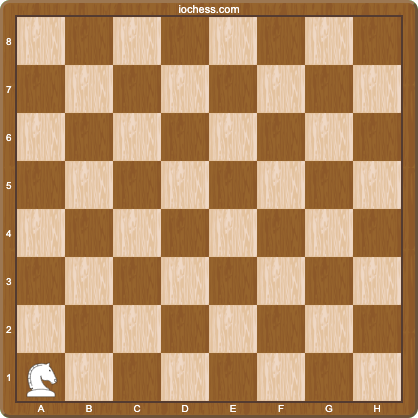
Start on a board, numbering each visited square from 1 to 64. A first goal is reaching 50 before getting stuck. Then try it blindfolded by speaking moves, for example, Ng1-f3-g5-f7. Graduate to full mental tours. For targeted drills, see our 9 essential blindfold exercises for every level.
3. King and Pawn Endgames
Most endgames simplify to king and pawns, so tracking a few pieces teaches reliable visualization. Focus on opposition, key squares, and the rule of the square. In K+P vs K, learn when you win by shouldering the king away and when the defender draws by reaching the square of the pawn.
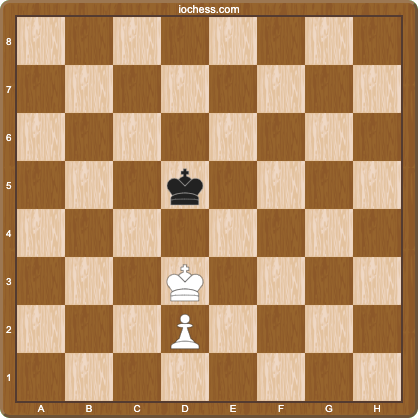
Practice by visualizing K+P vs K and K+2P vs K before touching the board. State the winning path from memory, then verify with a board or tablebase. As you improve, add pieces like K+R vs K to stretch visualization. Our blindfold endgame training guide covers advanced positions like the Lucena and Philidor.
4. Blindfold Endgame Studies
Set a 15-minute timer per study. Most have 3 to 7 pieces, so you can hold the full position and variations in mind. The aim is not to solve every study, but to keep a clear picture while calculating. Elite players note that blindfold play taxes concentration and calculation like few other tasks.
Method: start with tablebase positions, then composed studies. Ask guiding questions, for example, "Can White queen the passed pawn?" If not, find exactly where the defender intercepts. If stuck, peek at the diagram, then rebuild it blindfolded and try again. Blend this with our chess memory techniques guide for systematic recall work.
5. Piece Tour Exercises
Map routes for a single piece between two squares. For example, a bishop from g1 to f8 goes Bg1-c5-f8. Bishops must start and end on the same color. Rooks switch files and ranks in sequence, and knights jump L-shapes that dodge intervening pieces.
Begin with two-move paths, then three to five moves. Time yourself: find a three-move bishop path from a1 to h8 or the fastest rook route from a2 to h7. Record best times to track speed gains. Improve diagonal awareness with chess conceptualization training to build a stronger mental framework.
6. Quadrant Visualization
Split the board into four 4x4 quadrants: a1 to d4, e1 to h4, a5 to d8, e5 to h8. Working memory holds about seven chunks (George Miller's classic estimate; later research puts the practical limit closer to four), so quadrants reduce load while preserving identical corner and color patterns in each block. This keeps the mental board stable during calculation.
Practice by scanning one quadrant, listing occupants and attacks. Expand to two adjacent quadrants, then three, then all four without losing track. Switch quadrants mid-line to rehearse transitions. Our core pillar on chess visualization training ties quadrant work to broader mental board skills.
7. Diagonal Memorization
Know diagonal families on sight. For example, c4 lies on the a2-g8 diagonal, and e4 lies on the a8-h1 diagonal. The long diagonals a1-h8 and a8-h1 drive pins, fianchetto pressure, and mate nets like Bc4 against f7. Many players find bishop lines and knight jumps hardest at first.
Create flashcards: "e4" should cue "light square on the a8-h1 diagonal and on d3-f5." Drill until instant. During tactics, verbalize diagonals, for example, "bishop from c1 to h6 captured the knight on f4," to anchor geometry in memory. Work through our 5 visualization techniques from top chess players for master-level routines.
8. Position Reconstruction Drills
Study a real position for 30 seconds, cover it, then reconstruct from memory, verbally or on paper. Start with eight pieces and add two per week until you can handle full setups. Many 1800-rated players can play blindfold through book openings and recreate simple middlegames after a brief glance. This was exactly the methodology Chase and Simon used in their 1973 "Perception in Chess" study, which showed that masters excel at real positions but not random ones, proving chunking, not photographic memory.
Prefer master-game positions over random piece drops, because logical placement improves recall and pattern recognition. Begin with clean structures, then add complexity. Track weekly accuracy, noting common errors like swapped files or missing pawns to target weaknesses.
9. Coordinate Naming Exercises
Know algebraic names and colors cold. A square is both its label and its color, for example, "e4, light." This speeds mental routing for moves like "rook to the seventh" or "knight to a light central square."
Drills: name all knight moves from e5, list neighbor squares of d4, or have a partner call any square and reply with its color plus four knight destinations. Progress from locating squares to naming neighbors to listing legal moves. Track results with systematic coordinate training.
10. Opening Sequence Visualization
Select one opening line 8 to 10 moves deep. Recite it without a board, pausing after each pair of moves to rebuild the full position. Short-term memory holds about five to seven items, so chunking sequences preserves accuracy while you add depth.
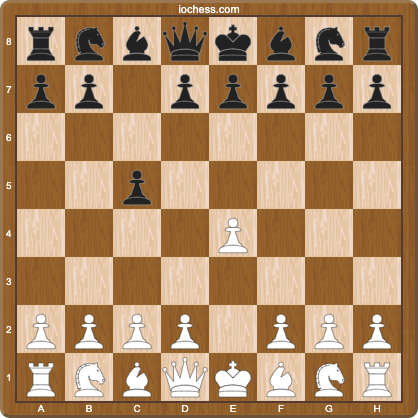
Practice daily until you can visualize the line flawlessly, then add a second branch. Start with forcing tactical lines with few sidelines, then graduate to positional systems with transpositions. Tie this into our structured blindfold training regimen for consistent weekly progress, and compare approaches in our Dark Squares vs Lichess breakdown.
Conclusion
Best starting drills for fast gains: 1) Square Color Identification, 9) Coordinate Naming, and 5) Piece Tours, ideal for 10-minute sessions. Best for over-the-board conversion and endgame accuracy: 3) King and Pawn Endgames and 4) Blindfold Endgame Studies. Best for advanced visualization stamina: 8) Position Reconstruction and 10) Opening Sequence Visualization.
Micro-action: set a 10-minute timer today, clear 50 random square colors, then map a three-move bishop tour from a1 to h8. Build to 15 to 20 minutes by week two.
Ready for a structured plan with tracked drills and targets? Start your progressive training journey and stack these exercises into a weekly routine.
Sources: W. G. Chase & H. A. Simon, "Perception in Chess," Cognitive Psychology 4 (1973); H. J. R. Murray, A History of Chess (Oxford University Press, 1913); G. A. Miller, "The Magical Number Seven, Plus or Minus Two," Psychological Review 63 (1956).
Frequently Asked Questions
How long does it take to learn blindfold chess?
The foundations, naming square colors and coordinates instantly, take a few weeks of short daily drills. Playing a full slow blindfold game usually takes a few months of consistent practice. Progress depends far more on daily reps than on raw talent.
Do you need to be a strong player to train blindfold visualization?
No. Blindfold ability tracks pattern knowledge and board vision more than rating. Players around 1200 to 1800 can already play through known openings and rebuild simple positions from memory after a glance. Beginners simply start with colors and coordinates.
Does blindfold training help your over-the-board chess?
Yes. Masters from Réti to modern grandmasters reported that blindfold work sharpened their visualization and calculation. A clearer mental board means you see forcing lines without touching pieces, which reduces blunders and speeds up decisions in normal games.
Can you practice these drills without a board or app?
Many of them, yes. Square colors, coordinate naming, diagonals, and verbal knight tours need no board and fit into commutes or breaks. Position reconstruction and endgame studies are easier with a board or app to check your answers.
Last updated
Related Articles
Magnus Carlsen and Blindfold Chess: How the Champion Trains Without the Board
Magnus Carlsen and blindfold chess go beyond a stunt. In New York in 2015 he tracked three boards with clocks, and in Vienna he faced five opponents w…
Antoine · 8 min read

How to Choose a Blindfold Chess Trainer: Features That Actually Matter
Disclosure: Dark Squares is our product. We have aimed for a fair comparison, but readers should weigh our perspective accordingly. Blindfold training…
Antoine · 7 min read

Koltanowski vs Najdorf: Two Blindfold Masters, Two Different Methods
Two blindfold records still frame the debate: George Koltanowski's 34 boards in Edinburgh (1937) and Miguel Najdorf's 45 boards in São Paulo (1947, 39…
Antoine · 9 min read