
Across recorded history, masters have played chess without sight, from Philidor's 1783 exhibition at Parsloe's in London to Timur Gareyev's 48-board world record in 2016. Blindfold play stirs fears about brain strain and myths about photographic memory, yet it also sharpens calculation and opens competition to visually impaired players. This guide separates the myths from the verified truths. You will see documented records, research-backed methods, and modern tools that make training accessible at any level.
What is blindfold chess?
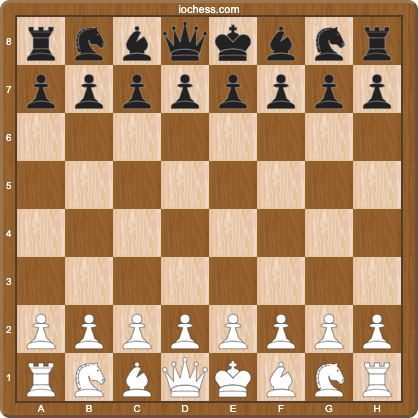
Blindfold chess removes visual access to the board. Moves are spoken in algebraic notation, such as Nf3 or Bxc5, and both players track the position mentally. One or both players cannot see the pieces, so the game proceeds entirely through announced moves and memory.
Formats range from head-to-head games to simultaneous exhibitions with dozens of boards. The practice dates back centuries, from royal courts to coffeehouses, and now supports three goals: training visualization, creating elite challenges, and enabling inclusive play for visually impaired competitors. For a structured starting path, see our 7-step journey for blindfold beginners.
Why blindfold chess matters
Cognitive benefits and skill development
Blindfold training strengthens memory, concentration, pattern recognition, and abstract thinking in a single task. A PMC/NIH review of chess cognition reports that chess masters depend on abstract relations and stored patterns more than on vivid mental images, which helps explain deep calculation without sight. For a complete training roadmap, see our pillar guide on chess visualization training.
Accessibility and inclusion
Blindfold formats let visually impaired players compete on equal terms. Announced moves and algebraic notation remove the visual barrier entirely, so opponents can play by email, phone, or over-the-board with any sighted partner. The International Braille Chess Association runs regular Olympiads and Championships using these same principles.
Pushing human cognitive limits
Elite events test how much the mind can track under pressure. Public exhibitions by world-class players show that top players can manage rich middlegames entirely in memory, rebutting the claim that blindfold chess only works against weak opposition. For more on this, read blindfold chess world records.
How blindfold chess actually works
Memory systems and pattern recognition
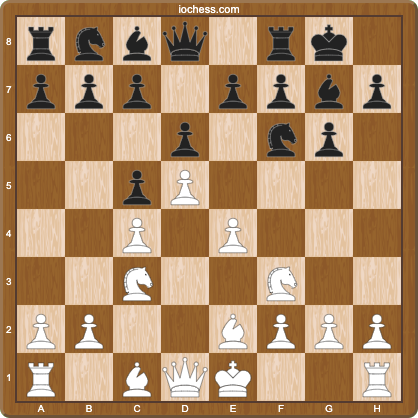
Strong blindfold players do not snapshot the board. Chase and Simon's 1973 landmark study found that masters recall positions by chunking pieces into meaningful groups of 4 to 5, with stronger players recalling more and larger chunks. Critically, the same masters showed no advantage over amateurs on random positions, proving that the skill is pattern-based, not image-based. A player may hold a King's Indian structure with a knight on c5 pressuring White's center, which compresses many details into one mental chunk.
Techniques used by elite players
George Koltanowski, Guinness record holder for 34 boards at Edinburgh in 1937, famously described his mind as working like a "gramophone record" of verbal move sequences, not a visual image. Timur Gareyev's 2016 Las Vegas world record of 48 simultaneous blindfold games was set over 19 hours and 9 minutes while he pedaled an exercise bike, combining physical exertion with mental mapping of 1,536 pieces across the boards.
The learning process
Players improve through staged practice. Beginners start with square colors training, then progress to coordinates, short move sequences, and finally full games. Train the foundations on Dark Squares square colors trainer and coordinate drills. For a complete regimen, see our structured blindfold chess training regimen.
Real-world examples from chess history
Philidor 1783 London
François-André Danican Philidor played three simultaneous blindfold games in London in 1783, a feat so extraordinary at the time that it was documented as an early modern milestone in chess memory. This set the template for public blindfold demonstrations for the next two centuries.
Morphy 1858 Paris
Paul Morphy's legendary 8-board blindfold display at the Café de la Régence in Paris lasted roughly 10 hours, finishing with 6 wins and 2 draws against strong French opposition. The exhibition cemented his reputation and drew standing-room crowds.
Alekhine 1933 Chicago
World champion Alexander Alekhine played 32 boards blindfold in Chicago in 1933, scoring +19 =9 -4 over 14 hours. His ability to track so many games simultaneously was a landmark demonstration of trained working memory.
Koltanowski 1937 Edinburgh and 1960 San Francisco
George Koltanowski set the Guinness record for simultaneous blindfold games at 34 boards in Edinburgh in 1937. In 1960 in San Francisco, he played 56 consecutive blindfold games, which is a different record than simultaneous display, and the distinction matters: consecutive games reset working memory between each, while simultaneous requires holding all positions in parallel.
Najdorf 1947 São Paulo
Miguel Najdorf's 45-board blindfold exhibition in São Paulo in 1947 produced 39 wins, 4 draws, and 2 losses. Najdorf had escaped Nazi-occupied Poland in 1939 and lost his family in the Holocaust, and he used high-profile blindfold displays partly to broadcast his survival to any relatives who might still be alive.
Gareyev 2016 Las Vegas
Timur Gareyev's 48-board simultaneous exhibition broke the Guinness record. He played for 19 hours and 9 minutes while pedaling an exercise bike, using memory palace techniques that assigned each game to a mental room and varied openings to prevent cross-contamination. He posted a strong score and reported intense mental fatigue for days afterward.
Common misconceptions, debunked
Myth 1: "Blindfold chess damages the brain"
The USSR banned blindfold simultaneous exhibitions in 1930 on supposed health grounds. Modern research finds no medical basis for this claim, and the ban is widely understood to have been ideological rather than scientific. Hearst and Knott's 2005 book Blindfold Chess reviewed the available evidence and found no proof of lasting cognitive harm. Marathon events like Gareyev's 48-board simul do produce short-term fatigue and temporary insomnia, but moderate training is safe. For a full discussion, see is blindfold chess dangerous.
Myth 2: "You need photographic memory"
Chase and Simon's 1973 study settled this definitively. Masters recall familiar positions through chunking of 4 to 5 pieces, not photographic imagery, and they lose their advantage on random positions where no patterns apply. Koltanowski himself described his method as verbal and "gramophone-like". If the skill were based on innate imagery, experts would recall random positions just as well as real ones. They do not.
Myth 3: "Only geniuses can play blindfold"
Every strong blindfold player started with the basics: naming square colors, tracing knight jumps, and holding short sequences. Progressive training builds the capacity. Explore the step-by-step path in our 9 essential blindfold exercises for every level.
Myth 4: "Blindfold is just a party trick"
Alekhine, Najdorf, and Koltanowski were world-class players who used blindfold work to sharpen calculation and pattern recognition. Modern methods target fewer blunders, deeper candidate-move lists, and better endgame conversion. See blindfold chess benefits unveiled for documented gains.
Myth 5: "It will tire you out"
Marathon exhibitions like Gareyev's 19-hour simul do exhaust the mind, and Najdorf reported extreme fatigue after São Paulo. Moderate daily practice, however, builds capacity the way measured exercise builds fitness. The risk is dosage, not the activity itself.
- Blindfold chess uses spoken notation, with players holding full positions in memory.
- Chase and Simon 1973 proved experts rely on chunks and patterns, not photographic images.
- Hearst and Knott 2005 found no evidence of lasting brain harm from blindfold training.
- The USSR's 1930 ban was ideological, not medical.
- Verified records: Philidor 1783 (3 boards), Morphy 1858 (8), Alekhine 1933 (32), Koltanowski 1937 (34 simultaneous), Najdorf 1947 (45), Gareyev 2016 (48).
- Moderate training sharpens calculation, marathon exhibitions require careful recovery.
Start today: Pick one short game you know well and replay it blindfold from memory, checking against the score afterward. Add one move per day until you can hold a full game. Ready to train with structured drills? Start your blindfold training on Dark Squares.


