
Carlsen vs Nakamura Blindfold 2026: Lessons from the Match
Antoine9 min read
Table of contents
Two super-grandmasters played a full game without seeing a single square. Could you keep an entire position in your head for an entire game? This recap of the Carlsen and Nakamura blindfold duel shows that this skill is trainable. Many players struggle when the board disappears, and their calculation collapses. That gap is real, and it is solvable. In this guide, you will learn practical visualization drills, strategic choices, and pressure tools. For the deeper case for why top players train without a board, see the reasons behind blindfold chess.
The art and challenge of blindfold chess
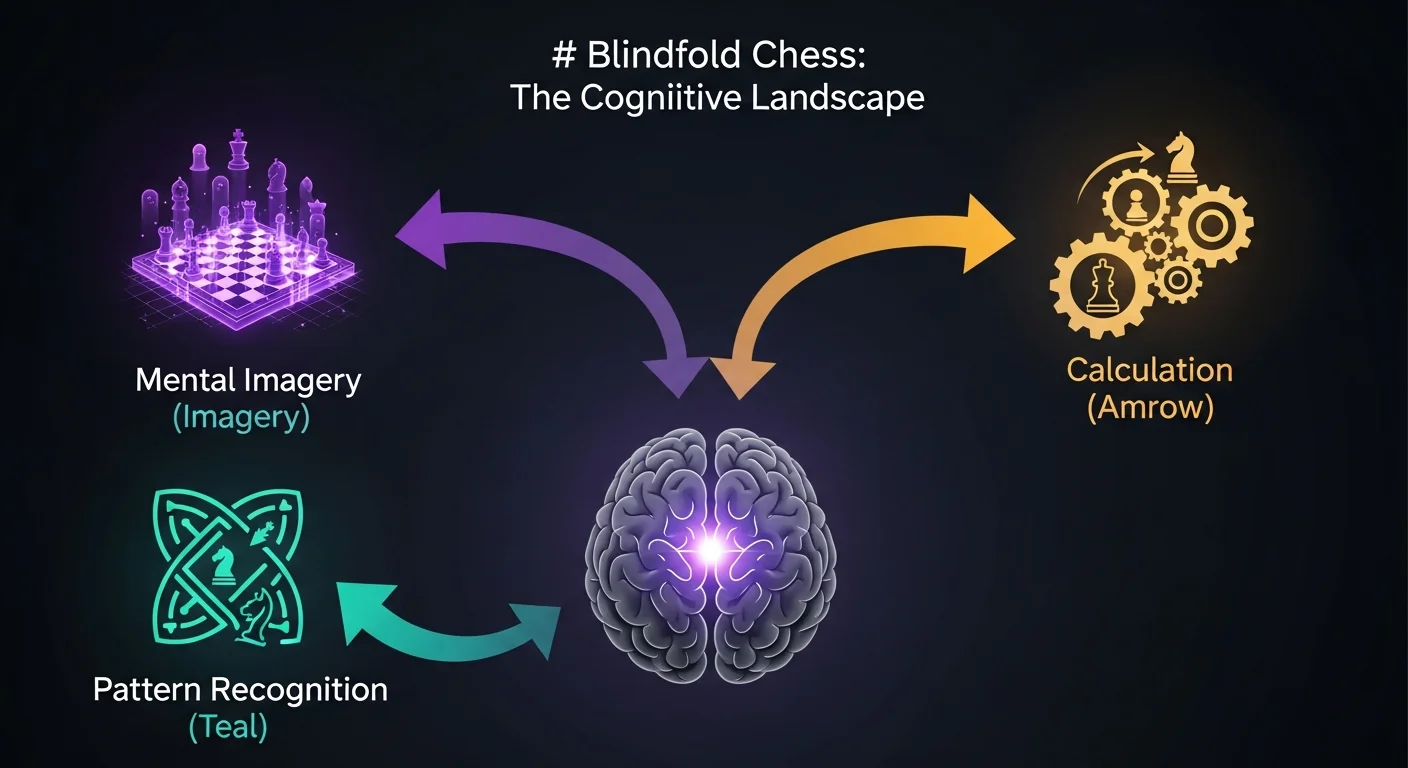
Blindfold chess removes the board and pieces entirely. Players must build and maintain a complete mental image of the position at all times. Every move lives in the mind, which demands intense focus and spatial memory. It is chess at its most cognitively demanding.
This format amplifies every phase of the game. Tactical patterns become harder to spot. Strategic plans require deeper visualization. Even simple calculations demand full attention.
Blindfold play is not a novelty. It reveals how top players compress information into patterns. They perceive relationships, pressure points, and dynamic plans, not isolated squares. That holistic processing separates masters from amateurs, and the research on the cognitive benefits of blindfold chess shows the transfer back to sighted play is concrete.
The cognitive challenge
Blindfold play tests working memory and spatial reasoning together. Beginners track 5 to 7 pieces at a time, while masters visualize complete positions.
The hardest moment in any game is the move where memorized theory runs out and original thinking starts, and blindfold chess magnifies that transition because you navigate unfamiliar territory with no visual landmarks.
For aspiring players, blindfold chess offers a powerful training ground. Start with simple drills such as a knight's tour or tracking pawn structures. These skills transfer directly to regular games, where clearer visualization improves calculation and pattern recognition. The blindfold chess learning hub breaks this progression into concrete steps.
A clash of titans: Carlsen vs. Nakamura
The scene was the usual calculation faces, without the board. On January 20, 2026 Magnus Carlsen and Hikaru Nakamura met for an exhibition blindfold game at ICE Barcelona 2026. The duel, played in a 15-minute time control and commentated live by Levy Rozman, ended in a draw (see the coverage from Chess.com and FIDE).
Carlsen, World Champion from 2013 to 2023 (he won five title matches between 2013 and 2021, then declined to defend in 2023), faced Nakamura, the strongest speed-chess player of the era, in what organizers billed as a first-of-its-kind publicly staged blindfold head-to-head between the world's two top-ranked players. The chess world leaned in. For context on the deepest historical performances, see our guide to blindfold chess world records.
The situation felt significant without a trophy. Both reputations as elite visualizers were on display. One misremembered piece, and everything could collapse. Instead, the game delivered a masterclass in precision.
The game defied expectations from the opening. Carlsen, expected to play the Catalan, opened 1.Nf3 instead, and Nakamura answered with the Agincourt Defence (FIDE). Carlsen set up a double fianchetto and maneuvered his knights until he won a central pawn.
Then, in Carlsen's words, "all of a sudden, it just exploded with tactics." Sharp play requires seeing many moves ahead and tracking activity across the board, computed mentally before each move is announced and defended by the opponent over the board they cannot see.
Nakamura had seen far enough ahead to sacrifice a bishop at the right moment (26...Bxe3!!, followed by 27...Rxd5!) and force a perpetual check, so the game ended in a draw. The result mattered less than the journey. They showed that elite visualization can rival board-based play in precision and creativity.
Strategic ingenuity: learning from their moves
The duel was not only a memory test. It showcased real-time strategy under pressure. Neither player followed a script. They adjusted, read threats, and shifted plans in positions they could not see.
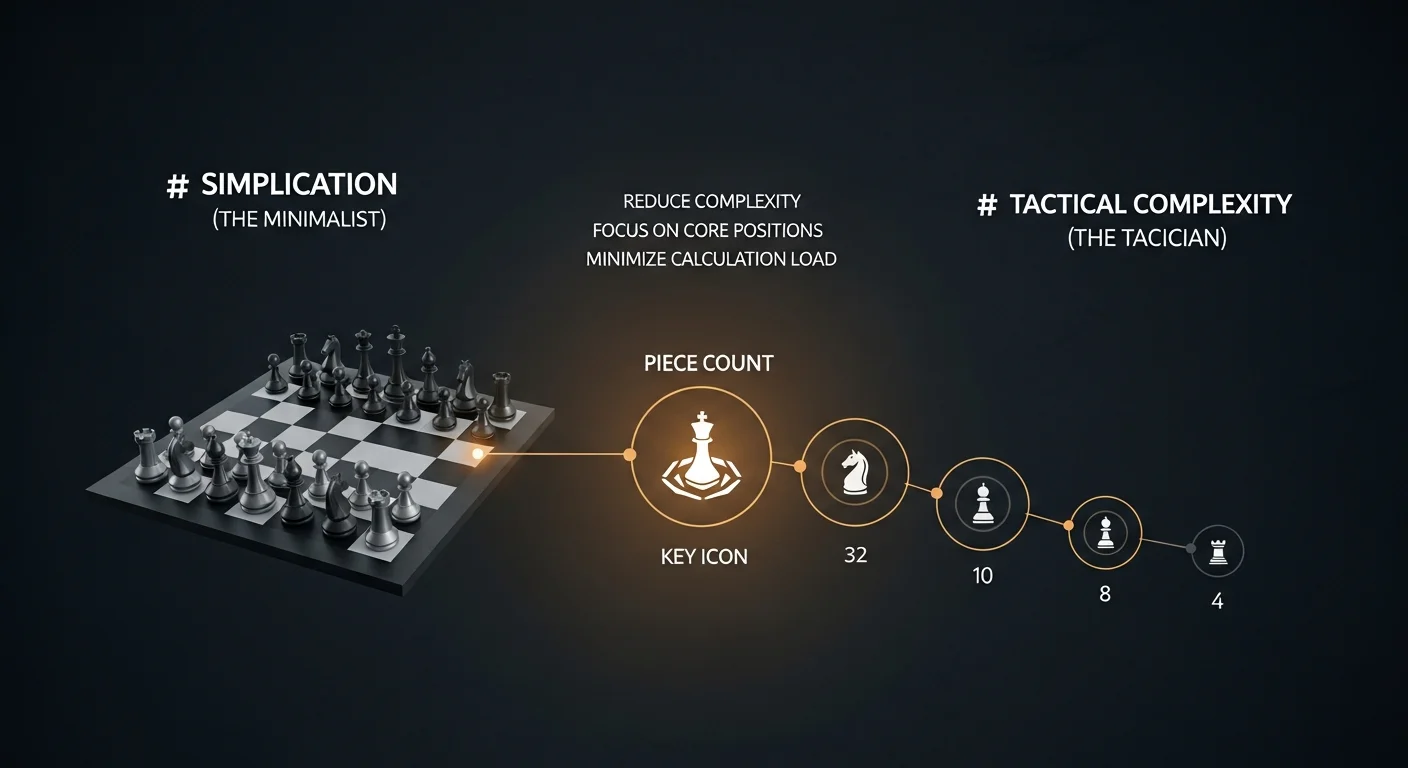
Carlsen played for a small, safe edge: a solid double-fianchetto setup, patient knight maneuvers, and a central pawn won without allowing early complications.
Nakamura chose the opposite path. A pawn down, he looked for activity and found the bishop sacrifice that forced the perpetual. That approach demanded deep visualization: the sacrifice only works if you can see the checks all the way to the repetition. The underlying patterns are covered in our breakdown of 5 visualization techniques from top chess players.
Both strategies offer practical guidance. Managing mental resources matters as much as brilliance. Simplify when your calculation feels stretched. Calculated risk-taking can shift momentum, but it requires strong visualization you trust.
The game ended level, yet the strategic battle taught plenty. Patience and aggression both worked. No single philosophy dominated. Precision and timely adaptation made both approaches viable.
Emotional resilience: handling high-stakes pressure
Strategy fails when nerves take over. Both players faced moments when pressure could have cracked them. They held firm, and their responses offer lessons far beyond chess.
Blindfold play removes the visual safety net. Every calculation lives in the mind. One slip can lose the game. Stress naturally rises in that environment, even at the top.
Elite competitors feel pressure. The difference is recovery speed when tension spikes. Nakamura's bishop sacrifice is a good example: a pawn down in a 15-minute blindfold game, he still trusted a long forcing line he could only see in his head.
Pressure management technique
When stakes rise, pause and breathe once or twice. That grounding creates space between your emotions and your next move.
Perspective mattered too. This was one game in long careers. Neither catastrophized. That mindset stops small errors from snowballing.
Pressure response | Ineffective approach | Elite player approach |
|---|---|---|
Initial stress spike | Try to suppress feelings | Acknowledge tension, breathe through it |
Mistake made | Dwell on error, spiral | Note it, adjust plan, move forward |
Time pressure | Rush decisions frantically | Prioritize key calculations, stay deliberate |
Uncertainty | Seek impossible certainty | Trust preparation, decide with available info |
Ready to train composure and vision together? Play a blindfold game on Dark Squares and build skills that transfer to every challenge.
Applying the lessons in your own chess
You study a brilliant game, feel inspired, then struggle to apply it. The gap between insight and execution can feel huge. The duel gives you specific techniques you can use today.
Improvement does not require genius. It requires targeted practice. Visualization sits at the center. When your mental board is clear, tactics appear, plans sharpen, and blunders fade.
Begin by analyzing your own games without moving pieces. Pull up a recent loss. Close your eyes and replay the critical moments. Where did your mental board blur? That is your training target.
Try a five-move challenge from a recent position. Calculate five moves ahead without looking. Write your line, then verify. This quick drill builds the same muscles seen in the duel.
A consistent theme from the duel: when calculation gets muddy, trade pieces and clarify the position. That is strategic wisdom. Train for clarity, not complexity for its own sake. Focus on patterns more than memorized trees of moves.
Build a weekly routine. Spend fifteen minutes a day on blindfold drills. Start with simple endgames like king and pawn versus king, then progress to busier middlegames. Track accuracy to see improvement. The structured training journey is a ready-made path for this.
Want a structured start? Unlock the full Dark Squares curriculum with a one-time 39 EUR lifetime pass, built around the same principles on display in this blindfold duel.
Embarking on your own blindfold journey
You have seen what elite players can do. Where should you start? You do not need full blindfold games on day one. Build your mental muscles gradually with manageable steps.
Begin with simple visualization. Picture an empty board for a minute. See square colors and coordinates. Place a single piece and move it mentally. A knight on e4 jumping to its options is a great first drill.
Next, shift to short tactics. Study a two-move mate for thirty seconds, then close your eyes and solve it. These bite-sized challenges test memory without overload. Immediate feedback keeps progress visible.
Use opening familiarity to reduce load. Pick a straightforward system like the Reti or London. Play the first six moves on a board until automatic, then announce those moves blindfolded while a partner mirrors them. Familiar patterns lighten the mental burden.
As confidence grows, extend your range. Play a full blindfold game against a beginner-level bot or a much weaker opponent. Expect mistakes. Pieces will vanish or appear on the wrong square. That is normal.
Building a sustainable practice routine
Consistency beats intensity. Ten daily minutes outperform a single weekly marathon. Frequent, focused exposure builds the neural pathways that support a stable mental board.
Use progressive difficulty. Warm up with something you have mastered, then add one element that stretches you slightly, perhaps two extra moves in a sequence or one more piece in a puzzle. This steady climb sustains motivation and growth.
Skill level | Exercise type | Time investment |
|---|---|---|
Beginner | Single piece visualization, simple tactics | 10 minutes daily |
Intermediate | Six-move sequences, weak opponent games | 15 to 20 minutes daily |
Advanced | Full games, complex middlegame positions | 30+ minutes daily |
Use technology as a support, not a crutch. Solve puzzles on Dark Squares blindfold training, then replay them with eyes closed. Study complete master games as mental workouts. Play one annotated game on a board and the next day try to reconstruct it from memory. You will miss moves at first; the attempt itself strengthens your positional memory.
Your first step: close your eyes and visualize a board. Pick a square, say its color and coordinates aloud. Do it five times with different squares. Tomorrow, repeat and add one quick knight move.
Related reading
Frequently Asked Questions
What other notable blindfold exhibitions happened in 2025 and 2026?
Blindfold content has surged across 2025 and 2026. The Chess.com Blindfold Chess Championship returned as a regular online event, drawing top players for short blindfold matches. The Saint Louis Chess Club ran a blindfold simul featuring Fabiano Caruana in late 2025. Timur Gareyev continued his campus tour attempting 20-board blindfold simuls. Hikaru Nakamura has streamed casual blindfold sessions on Kick and YouTube. The ICE Barcelona 2026 Carlsen-Nakamura match was the most publicized, but the format is clearly growing across 2025 and 2026 streams.
Why do elite grandmasters agree to blindfold showcase events?
Three reasons dominate. First, fees: blindfold exhibitions command higher appearance fees than standard rapid matches because they draw bigger audiences. Second, preparation advantage: Carlsen and Nakamura cannot rely on opening prep in an unscripted blindfold exhibition, which removes the pressure of memorized novelties. Third, brand positioning: blindfold play signals exceptional skill to non-chess audiences. For sponsors, blindfold matches are more shareable on social media than standard classical games because the visual of both players facing away from boards photographs well.
How is commentary different in blindfold events?
Commentators like Levy Rozman, Daniel Naroditsky, and Robert Hess follow a split-screen format: player cameras on one side, a digital board updating on the other. They must announce every move because viewers cannot read them from the player's mouth. Good blindfold commentary is slower than classical coverage, with more pauses to let viewers visualize. Commentators often explain what the player might be seeing mentally, which turns the event into a teaching moment. Rozman's stream of Carlsen vs Nakamura used this pattern effectively.
How do fans engage with blindfold streams on Twitch and YouTube?
Blindfold streams score higher on engagement metrics than standard chess streams. The chat speculates in real time about whether players can still see the position accurately, creating an interactive layer. Many streams now run viewer polls on moves before the player announces. Clip culture favors blindfold content because 30-second highlights of a sacrifice announced from memory go viral easily. Chess.com and Lichess both log higher puzzle completion rates in the 24 hours following a high-profile blindfold event, suggesting viewers translate inspiration into practice.
How can I study from annotated blindfold games to improve?
Load the PGN into Lichess Analysis or Chess.com with annotations. Play through the opening on the board. At move 10 to 12, close your eyes and continue. Try to predict the next move before revealing. Keep a log of where your visualization failed. The 37-move Carlsen-Nakamura draw is ideal for this because both players made instructive positional choices, especially Carlsen's simplification strategy. Games by Koltanowski and Najdorf from their record attempts are also well-annotated in historical chess databases.
Will a blindfold world cup or championship become a real format?
Probably yes within 3 to 5 years. FIDE does not currently sanction a blindfold world championship, but Chess.com, Chessable, and private organizers have discussed tournament series. The format needs standardized rules on move announcement (verbal versus keyboard), time controls, and anti-cheating protections since a hidden screen defeats the purpose. A likely first iteration: 8 to 16 invited grandmasters, rapid time control, full video coverage, played over 2 to 3 days. Expect a test event from Chess.com or Take Take Take platforms in 2027 or 2028.
Last updated
Related Articles

Judit Polgar Netflix Documentary: Inside the Chess Legend
As a twelve-year-old in 1988, Judit Polgar helped Hungary win the women's team gold at the Thessaloniki Olympiad, scoring 12½/13 on board two. She went on to repe…
Antoine Tamano · 8 min read
The Best Chess Endgame Training Tools in 2026
Endgames are the purest calculation in chess. With few pieces on the board, every move counts exactly, and there is no middlegame fog to hide a mistak…
Antoine · 5 min read
The Best Chess Opening Trainers in 2026, Compared
Studying openings is easy. Remembering them a week later, in a real game, is the hard part. That is the job of an opening trainer: not just to help yo…
Antoine · 6 min read